If you work in kitchenware sourcing, this question comes up more often than it seems: is acacia wood good for cutting boards? On the surface, it sounds like a simple material question. In real buying, it is usually about something bigger. Buyers want to know whether the wood is stable enough, whether the finish will look good in bulk orders, whether the board is easy to position in the market, and whether the supplier can keep quality steady from sample to shipment.
That is also why many buyers compare acacia with the idea of the best wood cutting board. They are not only choosing a board for cutting vegetables or serving bread. They are choosing a product that has to sell well, hold up in daily use, and fit smoothly into a private label or wholesale program. For that kind of job, acacia is one of the woods that gets attention for good reason.
Our small acacia chopping board fits directly into that discussion. It is a practical kitchen item, but it also works well as a retail product, a giftable item, and a custom project for buyers who want OEM / ODM support. That makes it more than a basic board. It becomes a product that can sit comfortably in both everyday kitchen use and business purchasing plans.
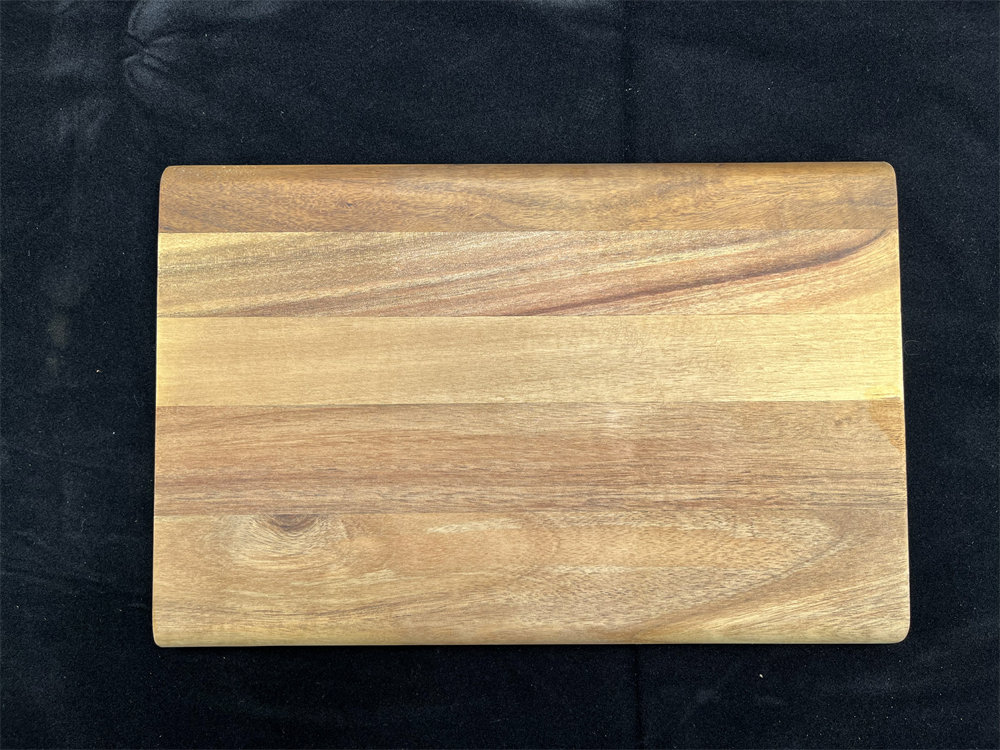
Acacia is popular because it gives a good first impression and usually a good second one too. The grain looks warm and natural, the board feels solid in the hand, and the product has a cleaner, more premium feel than many lower-end wooden alternatives. For buyers, that matters because visual appeal still plays a big role in kitchenware sales.
But appearance alone is never enough. The real issue is whether the material still performs well after the goods arrive. That is where many buyers get frustrated with wooden products. A sample can look smooth and well-finished, but once the bulk order lands, some boards may feel rougher, show color variation, or respond badly to moisture and storage conditions. That is why material choice cannot be separated from manufacturing control.
Acacia works well for many projects because it gives a balanced result. It is not chosen only because it looks nice. It is chosen because it usually offers a good mix of strength, natural texture, and market appeal. For brands and importers, that balance is often more useful than chasing the cheapest option.
In everyday kitchen use, acacia performs well enough to stay one of the most common materials in this category. It feels dependable, looks natural, and suits the way many consumers use cutting boards now. A board is no longer only for chopping. It may also be used for serving snacks, presenting cheese, or sitting on the counter as part of the kitchen look. Acacia fits that lifestyle quite naturally.
That is one reason the question best wood cutting board does not always have one fixed answer. The best wood depends on what the buyer wants the product to do. If the goal is a board that feels warm, useful, and easy to sell across several customer groups, acacia is a strong option. It does not feel too plain, and it does not require the buyer to explain too much to the end market.
For many importers and brand owners, that matters a lot. A product is easier to sell when people understand it immediately. Acacia boards usually have that advantage. They look familiar, they feel giftable, and they fit well into both home kitchen collections and broader tabletop ranges.
Most buyers are not worried about the wood name alone. Their real concern is what happens after the order is placed. Will the boards stay consistent in color and finish? Will the logo placement look clean? Will the edges be smooth enough? Will the packaging protect the boards well during shipment? These are the questions that affect repeat business.
This is where many sourcing problems begin. A supplier may quote acacia, but if production control is weak, the finished product may still feel disappointing. Poor sanding, uneven oiling, unstable thickness, or inconsistent moisture handling can all turn a good material into a weak product. In kitchenware, those details matter more than people think.
That is why experienced buyers often focus on the supplier as much as the wood itself. The material may open the conversation, but the factory’s ability to handle finish, size control, branding, and bulk order consistency is what keeps the cooperation going. For OEM projects, this becomes even more important because a custom product needs more than raw material. It needs process discipline.
Our small acacia chopping board works well because it fits the way many markets buy and use kitchen products now. A smaller board is practical. It is easy to handle, easy to store, and easy to include in gift sets, starter kitchen ranges, or simple retail programs. It does not ask the buyer to overcommit, which makes it easier to test in new channels.
That size also helps in business terms. Smaller boards are usually easier to pack, easier to combine with other kitchen items, and easier to fit into custom packaging concepts. For wholesalers and private label buyers, that gives more flexibility. A product like this can work as a standalone item, part of a kitchen bundle, or an entry product before expanding into a wider board collection.
What makes the product more useful is that it still keeps the natural value of acacia. Even in a smaller size, it does not feel cheap or overly basic. It still carries the wood grain, the warm appearance, and the everyday practicality that buyers want. That gives it a broader selling range than many plain low-cost chopping boards.
For many B-end customers, the product itself is only half the story. The other half is whether it can be adapted to match a brand, a sales channel, or a customer group. That is where acacia boards often do well. They are flexible enough for logo work, shape updates, packaging changes, and collection development.
This matters because many buyers are not just placing a one-time order. They are building a line. They may want a small board first, then a serving board, then a larger chopping board, all under one material story. Acacia makes that easier. It gives a collection a consistent natural look, which helps with branding and product planning.
Our product fits that path well. It is a useful base item for custom development, especially for buyers who want OEM / ODM support rather than a simple stock product. In practice, that means the board can move into branded packaging, logo customization, and broader kitchenware planning more smoothly. For a supplier, that kind of flexibility matters because buyers increasingly want products they can shape into their own catalog, not just resell as-is.
A lot of buyers ask whether acacia is good for cutting boards, but the better question is often whether the supplier can make acacia boards well and keep them consistent. In real orders, the supply side affects the outcome just as much as the material itself.
A board can look very good in one sample photo. That does not always mean the full order will feel the same. Buyers have seen this many times before. The first sample is clean, the first impression is strong, but later production shows small problems that become expensive at scale. Those problems do not always look dramatic. Sometimes it is just sanding, finish, or packing. But those details affect how customers judge the whole product.
That is why buyers who care about long-term supply usually prefer working with a supplier who can discuss material, finish, packaging, and customization clearly from the beginning. Especially in wholesale, private label, and project supply, clear communication saves more cost than a low quote ever will.
So, is acacia wood good for cutting boards? For many real market needs, yes, it is. Acacia offers the kind of balance that buyers often need: a natural look, practical use, good product feel, and enough flexibility for retail, gifting, and branded kitchenware programs. It is one of the materials that works well not only in the kitchen, but also in the buying process behind the product.
If you are comparing wood options, planning a kitchenware range, or looking for a supplier that can support OEM / ODM development, our small acacia chopping board can be a good place to start. Share your size ideas, logo details, or packaging needs with us, and we can help you work through the product direction, customization options, and bulk order planning in a more practical way.
Previous: