wooden spoons may look simple, but making a good one takes more than cutting a piece of wood into shape. For importers, kitchenware brands, supermarkets, and private label buyers, the real question is not only how a wooden spoon is made. What matters more is whether the spoon is made with stable material, smooth finishing, safe contact surfaces, and consistent workmanship from one order to the next.
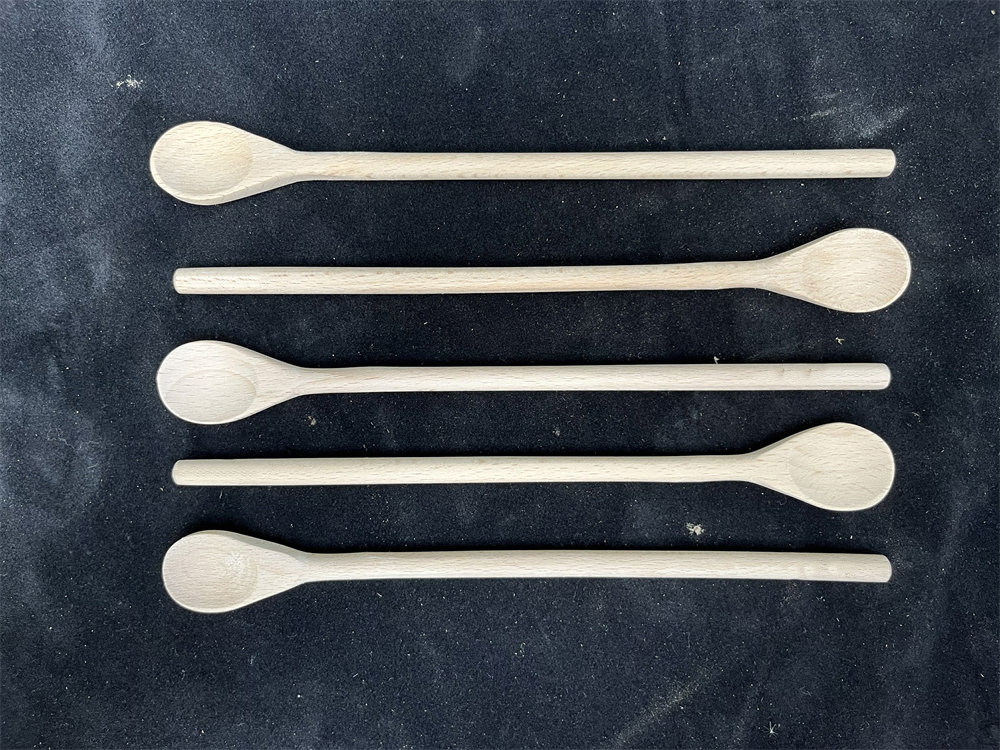
That is why buyers often pay close attention to the manufacturing process before placing a bulk order. A well-made wooden spoon should feel smooth in the hand, work well in daily cooking, protect cookware, and keep its shape during normal kitchen use. Our long handle wooden spoon is built around those practical needs. With a beech wood body, one-piece structure, and a clean natural finish, it fits both retail programs and OEM or ODM kitchenware projects.
A good wooden spoon starts with wood selection. Not every wood species is suitable for kitchen utensils. Buyers usually prefer wood that is dense enough to hold its shape, smooth enough to finish well, and stable enough for repeated daily use.
Beech wood is a common choice because it offers a clean grain, a natural look, and reliable durability for kitchen utensils. For buyers, this matters because raw material quality directly affects the finished spoon. If the wood is too soft, too rough, or not well selected, the spoon may crack more easily, absorb moisture unevenly, or show inconsistent appearance across the order.
This is one reason beech wood remains popular in cooking tools, serving spoons, and table utensils. It gives manufacturers a practical balance between appearance, strength, and processing efficiency.
Once the wood is selected, the next step is cutting and shaping. This is where the spoon starts to become a finished product instead of a raw wooden blank. The basic profile of the handle and spoon head must be cut accurately, especially when the buyer needs consistent size, shape, and feel across a full shipment.
For B2B customers, shape consistency is not a small detail. It affects packaging, display, customer experience, and brand image. A spoon that looks different from piece to piece creates problems very quickly in retail and wholesale channels.
Our long handle wooden spoon uses a one-piece structure, with the handle and spoon head formed as one continuous body. This helps create a cleaner look and gives the spoon a more stable feel in use. For buyers, a one-piece design is often easier to position in the market because it looks more refined and works well for both cooking and serving.
After shaping, the spoon must be sanded and polished. This stage is critical because even good wood can feel poor in the hand if the surface is not finished properly. Rough edges, uneven grain, and splinters are some of the most common quality problems buyers want to avoid.
A properly polished spoon should feel smooth along the handle, around the bowl, and across all edges. This improves safety, comfort, and product value. In kitchenware, surface finish often influences the first impression just as much as the shape.
For buyers supplying supermarkets, homeware stores, and food-service programs, clean sanding is especially important. It reduces complaints, improves shelf appeal, and makes the product easier to match with a premium or natural kitchenware range.
Wooden spoons are often chosen because they feel natural and work well with cookware. A good finish should protect the spoon while keeping that natural look and comfortable feel. Buyers generally want a finish that is clean, even, and suitable for regular kitchen use.
Our long handle wooden spoon keeps a natural surface style, which suits buyers looking for a simple and practical product rather than an overly decorative utensil. This kind of finish is useful in both household and commercial kitchen channels because it is easy to understand, easy to display, and easy to combine with other Wooden Utensils.
For some projects, buyers may want different lengths, shapes, engraving, or branded packaging. That is why custom development matters in wooden utensil supply. A supplier who can support OEM or ODM requests gives buyers more freedom when planning product lines for different markets.
Not all wooden spoons are made for the same use. Some are meant for cooking in deeper pots, while others are better for serving, tasting, or portion use. That is where size and handle length come in.
A long-handle spoon is useful for stirring, mixing, scooping, and working with hot dishes while keeping the hand farther from heat. That makes it practical in home kitchens, food shops, and light commercial use. Our spoon is positioned in this category, which gives buyers a clear everyday application and a broad customer base.
At the same time, smaller sizes are also important in the market. Products such as mini wooden spoons are often used for sampling, desserts, condiments, coffee service, and gift packaging programs. For buyers building a full wooden utensil range, offering both standard cooking spoons and smaller serving sizes can create stronger product coverage.
From a buyer’s point of view, the process is not only about one spoon. It is about whether the same quality can be repeated in bulk production. One good sample is not enough if the next shipment shows color variation, rough finishing, or different dimensions.
That is why stable production control matters so much in wooden utensils. Consistent cutting, shaping, sanding, and packing all influence whether the final order meets the customer’s expectations. For importers and private label buyers, consistency is often more important than price alone.
A supplier with real manufacturing experience is usually better prepared to control these details. In wooden kitchenware, this affects not only the spoon itself, but also the efficiency of repeat orders, packaging programs, and customized developments.
The process behind a wooden spoon affects several business concerns at the same time. It affects how the spoon looks on the shelf, how it feels in use, how well it matches the buyer’s brand positioning, and how easily it can be sold in retail or kitchenware channels.
For this reason, many buyers do not simply ask whether a spoon is made from wood. They ask how it is made, what material is used, how smooth it is, whether the shape is stable, and whether the supplier can support custom programs. These are practical sourcing questions, not just technical ones.
A spoon that is made carefully is easier to sell, easier to reorder, and easier to include in broader kitchenware collections.
Wooden spoons are made through a process that starts with suitable wood, moves through accurate cutting and shaping, and ends with careful sanding and finishing. When each step is handled well, the result is a spoon that looks natural, feels smooth, and performs reliably in daily cooking and serving use.
Our long handle wooden spoon is designed for buyers who need a practical beech wood utensil with stable quality and broad market use. If you are planning a kitchenware project and want support with size options, custom branding, or product selection, contact us. We can help you review your requirements and suggest a better-fit solution for your market.