Selecting the right wood species for cutting boards is essential for achieving durability, hygiene, blade protection, and long-term performance in the kitchen. Different hardwoods offer unique grain structures, densities, and natural properties that influence how a cutting board behaves under daily use. Whether the board is intended for home cooking, professional food preparation, or retail distribution, choosing a reliable wood material ensures safer food handling and a longer lifespan. At XINYILIN, we focus on producing cutting boards made only from high-quality hardwoods. Our wooden cutting board series reflects our commitment to strong, stable, and food-safe materials.
The wood species determines a board’s resistance to knife marks, its ability to withstand moisture, and its hygiene performance. Good cutting board woods always share several core characteristics: they are dense enough to resist deep cuts, have tight grain structures, and maintain structural stability over time. Open-pore or overly soft woods tend to trap moisture and bacteria, while overly hard woods risk damaging knife edges. For this reason, manufacturers like XINYILIN carefully select hardwoods that offer the right balance between strength and knife-friendliness for our wooden cutting board products.
Hardwoods are the universal standard for cutting board production because they perform well under repeated chopping and resist warping. Several species consistently stand out for their balance of performance, beauty, and food safety.
| Wood Type | Hardness | Grain Pattern | Advantages |
|---|---|---|---|
| Maple | Medium-hard | Tight grain | Hygienic, durable, excellent for general use |
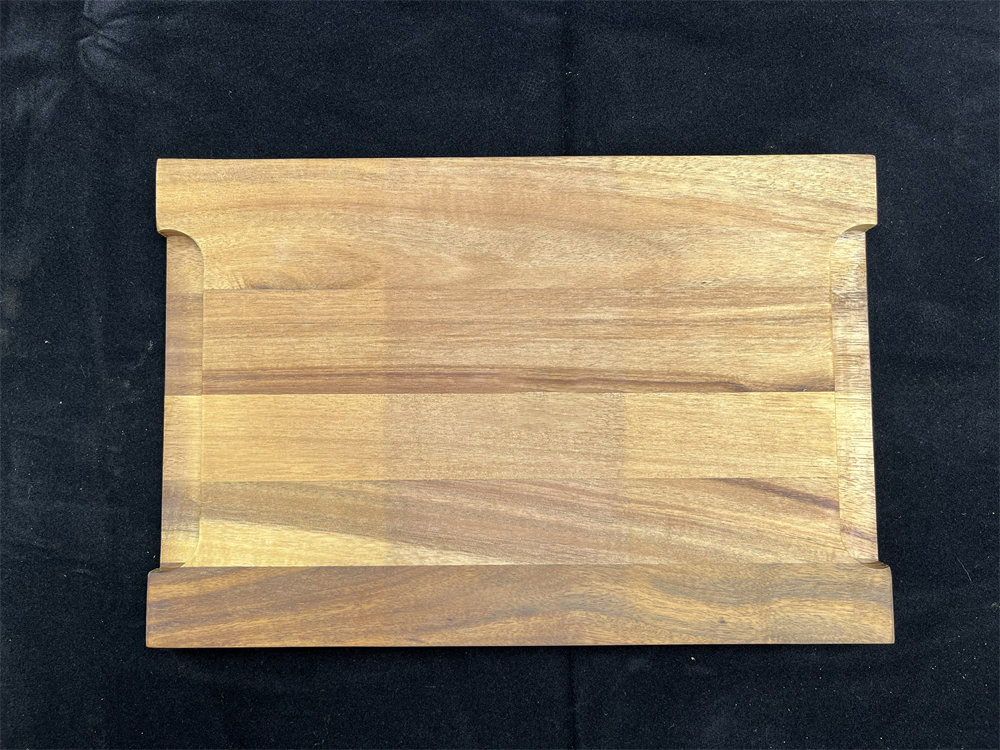
| Acacia | Hard | Interlocked grain | Moisture resistant, visually unique, long lifespan |
| Walnut | Medium | Smooth grain | Gentle on knives, premium appearance |
| Cherry | Medium | Tight grain | Smooth cutting surface, warm patina with age |
| Beech | Medium-hard | Straight grain | Stable and affordable, widely used in Europe |
These woods are chosen because they deliver structural reliability, food safety, and attractive appearance. At XINYILIN, we regularly work with maple, acacia, beech, and other globally trusted hardwoods across our wooden cutting board manufacturing line.
Tight grain woods such as maple and beech minimize fluid absorption, helping cutting boards remain sanitary even after long-term use. Woods like acacia feature naturally interlocked grain patterns that increase toughness and provide a distinctive appearance. Each grain pattern influences knife feel, board longevity, and surface cleanliness.
Manufacturers also evaluate grain direction when designing boards. End-grain cutting boards, for example, show superior “self-healing” because wood fibers separate and close around each cut. XINYILIN integrates grain techniques into many custom OEM and ODM designs for our customers worldwide.
A good cutting board must be durable but not overly hard. Hardwoods in the middle of the Janka scale are ideal: they resist dents while remaining gentle on knife blades. Maple and walnut are classic examples of woods with ideal hardness levels. Acacia is harder but offers outstanding moisture resistance and stability.
Choosing the right hardness ensures:
Longer knife life
Reduced deep scoring on the board
More stable chopping surfaces
Better long-term structural integrity
This balance is a core reason XINYILIN selects only specific hardwoods for our wooden cutting board range.
High-quality cutting boards must resist swelling, shrinking, and cracking. Hardwoods with natural oils or tight fibers maintain better moisture performance. Acacia, for instance, contains natural oils that help prevent excessive absorption. Maple and cherry remain stable due to their balanced fiber structure.
To further enhance stability, XINYILIN applies controlled drying procedures, precision joining, and food-safe finishing oils to ensure each wooden cutting board retains its shape through everyday washing and food preparation.
Each wood species offers distinct visual characteristics:
Walnut provides a deep, luxurious tone ideal for upscale kitchens.
Acacia features striking contrasts that make every board visually unique.
Maple delivers a clean, professional appearance for culinary environments.
Cherry darkens gracefully over time, developing a warm, rich finish.
Beech offers a classic light tone, perfect for minimalist styles.
These natural variations allow XINYILIN to produce cutting boards suitable for global supermarket brands, giftware companies, and professional kitchen suppliers.
The construction technique influences durability, cutting feel, and cost.
| Construction Style | Characteristics | Benefits |
|---|---|---|
| End-grain | Wood fibers face upward | Superior knife friendliness, self-healing surface |
| Edge-grain | Long fibers run lengthwise | More durable, affordable, resistant to warping |
| Face-grain | Flat planks | Best for serving boards rather than heavy cutting |
XINYILIN is equipped to produce both end-grain and edge-grain cutting boards based on customer preference and intended use.
When choosing a cutting board, consumers should evaluate:
Wood hardness and grain tightness
Resistance to moisture and cracking
Knife friendliness
Maintenance requirements
Weight and stability
Aesthetic preferences
Sustainability and responsible sourcing
At XINYILIN, these considerations influence every decision we make in material selection and product design.
As a manufacturer with more than 15 years of wooden kitchenware production experience, XINYILIN specializes exclusively in real hardwood cutting boards, not bamboo or softwood alternatives. Hardwood ensures better durability, safer food handling, and more consistent performance across global markets. Our wooden cutting board line represents the craftsmanship, environmental responsibility, and product reliability trusted by supermarkets, brand buyers, and professional distributors.
The best woods for cutting boards are durable, stable, and gentle on knives while offering strong hygiene performance. Maple, acacia, walnut, cherry, and beech remain top choices because of their balanced hardness, beautiful grain structures, and long-lasting functionality. By selecting these premium hardwoods, XINYILIN ensures that every wooden cutting board meets the expectations of chefs, retailers, and international buyers who value reliability, craftsmanship, and natural material quality.