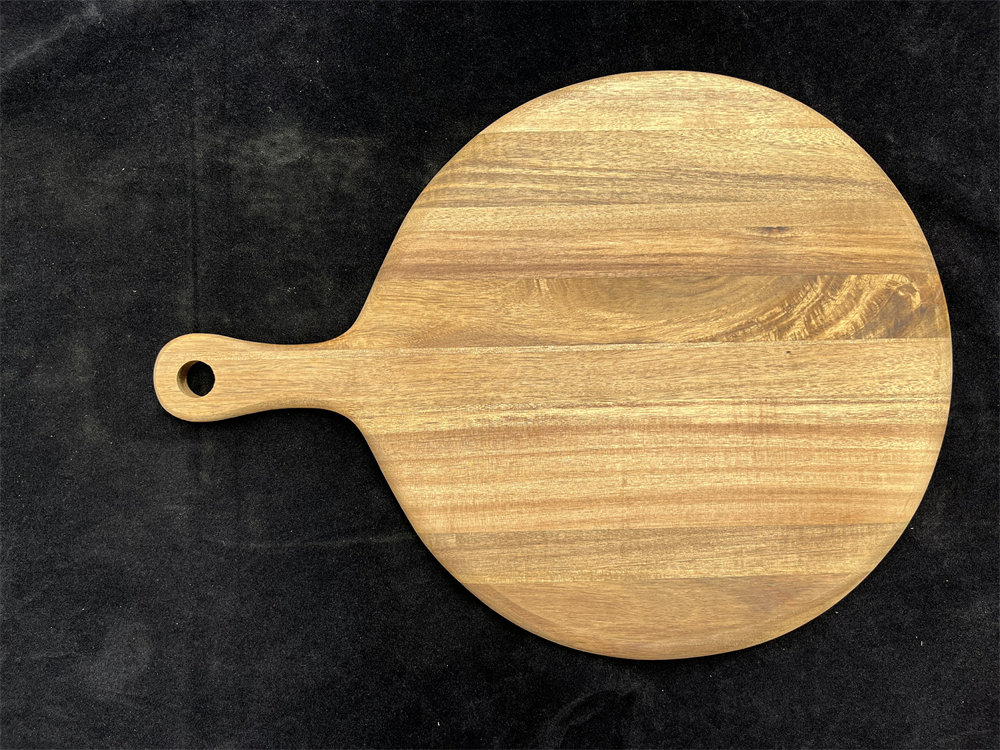
A Wooden Cutting Board is one of the most essential tools in any kitchen, valued for its durability, natural appearance, and safe cutting surface. While there are many wood types available, acacia wood remains one of the most preferred materials due to its density, moisture resistance, and visually striking grain pattern. Understanding how a wooden cutting board is made helps consumers appreciate the craftsmanship behind high-quality products and allows manufacturers, retailers, and buyers to identify boards that truly meet professional standards. At XINYILIN, we specialize exclusively in crafting acacia wood cutting boards, ensuring stability, beauty, and long-term performance across our entire product line. Customers can explore our designs through the wooden cutting board collection.
The process begins with careful selection of raw acacia lumber. Acacia trees produce dense, sturdy hardwood with naturally rich color variation, which makes each board unique. The wood must undergo controlled drying to reduce moisture content to an optimal level. Proper drying prevents warping, cracking, and uneven texture during later stages of production.
Acacia boards are typically kiln-dried until they reach a stable moisture percentage that supports precise shaping. XINYILIN ensures that each piece of lumber used in our wooden cutting board range passes strict inspection for grain consistency, surface cleanliness, and internal stability before entering the next manufacturing stage.
Once acacia wood is prepared, it is cut into planks that will form the body of the cutting board. The dimensions depend on the final design—whether the board will be rectangular, round, thick, or styled for serving. Cutting must be precise to ensure uniform thickness and seamless assembly later.
The shaping process involves trimming edges, smoothing surfaces, and preparing the planks for jointing. Acacia wood’s density provides excellent structural integrity, allowing boards to maintain a stable cutting surface even under frequent knife contact. At XINYILIN, CNC machining and precision saws help maintain accuracy while preserving the natural grain aesthetic.
Many high-quality cutting boards are constructed by assembling several planks side by side. This increases structural strength and reduces the risk of deformation. For acacia boards, planks with complementary grain patterns are carefully selected to ensure visual harmony.
An industrial-grade adhesive safe for food contact is applied to the edges before the planks are aligned and clamped. The clamping step must hold the wood firmly until the adhesive cures completely. This process results in a solid, stable base from which the board takes its final form.
The craftsmanship used in joining directly affects longevity and hygiene. At XINYILIN, our joining techniques ensure that boards within the wooden cutting board series remain strong, seamless, and resistant to liquid penetration.
After the board is formed, sanding becomes one of the most important steps. Proper sanding smooths the surface, rounds the edges, and enhances the tactile feel. Multiple rounds of sanding—progressing from coarse to fine grit—help eliminate minor imperfections and ensure a comfortable cutting experience.
The goal is to achieve a smooth yet natural texture that allows knives to glide without obstruction. Acacia wood responds exceptionally well to sanding due to its dense fibers, revealing patterns and tones that highlight its aesthetic value.
A polished acacia cutting board showcases a blend of light and dark streaks, which is a signature characteristic valued by premium kitchenware buyers.
Finishing enhances both appearance and durability. A food-safe oil, typically mineral oil or natural plant-based oil, is applied to the board’s surface. Acacia wood absorbs these oils well, developing richer color depth and improved moisture resistance.
The oiling process not only protects the fibers but also highlights the natural grain structure. It helps the board resist drying and cracking, making maintenance easier for end users. XINYILIN finishes all boards with safe, high-quality oil that prepares them for immediate use while preserving natural beauty.
Every board must undergo strict quality control before packaging. Surface smoothness, joint stability, thickness consistency, and edge finishing are examined. Since acacia wood features naturally varied grain, visual presentation is also carefully inspected to ensure each board meets aesthetic standards.
XINYILIN’s quality team verifies each wooden cutting board for durability, safety, and craftsmanship, ensuring that customers receive products aligned with professional kitchen expectations.
| Inspection Area | Requirements |
|---|---|
| Surface Smoothness | No rough patches or uneven sanding |
| Moisture Stability | Board must remain flat under testing |
| Joint Integrity | No visible gaps, cracks, or weak bonding |
| Finish | Even oil absorption, no residue |
| Appearance | Grain harmony and natural aesthetic |
This ensures that every cutting board leaving the factory is consistent in performance and presentation.
Some boards include additional functional details such as juice grooves, handle cutouts, hanging holes, or reversible designs. These features must be carved accurately to ensure that they do not weaken the structure.
Acacia wood’s density allows for detailed shaping without compromising durability. XINYILIN offers customizable shapes and added features for clients seeking private-label or OEM solutions. Each enhancement is integrated carefully to maintain the board’s overall strength and visual appeal.
Acacia stands out among hardwoods for its durability, moisture resistance, and rich coloration. Its natural hardness ensures that cutting boards withstand years of use without deep scarring. Meanwhile, its tight grain reduces the absorption of liquids, supporting hygiene and easier cleaning.
Acacia is also known for its sustainable growth patterns, making it an environmentally responsible choice for large-scale production. Restaurants, retailers, and households value acacia boards for their blend of strength and beauty.
At XINYILIN, we focus exclusively on acacia wood for our wooden cutting board products, ensuring consistent quality and traceability across all manufacturing stages.
When the cutting board is ready, it is cleaned, re-oiled if necessary, and packaged carefully to prevent scratches or moisture exposure during transport. Protective wrapping, labeling, and carton preparation ensure the product arrives in perfect condition.
XINYILIN serves global markets, so packaging must meet standards for export, retail display, and storage. With years of OEM and ODM experience, our team ensures that every board is delivered safely and professionally.
Making a wooden cutting board requires thoughtful material selection, careful craftsmanship, and meticulous finishing. Acacia wood offers exceptional advantages in strength, moisture resistance, and aesthetics, making it the perfect choice for long-lasting kitchen boards. Through stages such as selection, cutting, joining, sanding, oiling, and quality inspection, a raw acacia plank is transformed into a highly functional kitchen essential.
XINYILIN’s wooden cutting board collection showcases this craftsmanship, combining expert manufacturing with the natural beauty of acacia wood. Whether for home cooking or professional use, acacia cutting boards made with precision provide durability, hygiene, and elegance for every kitchen.