In the bustling, high-stakes environment of professional kitchens, every tool is chosen with purpose. While home cooks might select cutting boards based on convenience or price, chefs in top restaurants make a deliberate choice: hardwood. Walk into the kitchen of any esteemed restaurant, from a neighborhood bistro to a Michelin-starred establishment, and you’ll likely find heavy, sturdy hardwood boards at every station.
But why? What makes a slab of wood the undisputed champion over plastic, bamboo, or glass? The answer lies in a perfect blend of superior functionality, unparalleled knife care, and inherent natural properties that plastic simply cannot replicate.
For a chef, a knife is an extension of their hand. Protecting this essential investment is paramount, and this is where hardwood shines brightest.
Hardwood, such as acacia, maple, or walnut, has a forgiving surface. Its microscopic grain structure gives slightly under a sharp blade, allowing it to sink in just enough for a clean cut without dulling the edge. In contrast, harder surfaces like plastic composite, glass, or stone quickly blunt a knife’s finely honed edge, leading to more frequent sharpening, reduced performance, and a shorter lifespan for your most important tools.
The common myth is that non-porous plastic is more sanitary. Science and chef experience say otherwise. High-quality hardwoods possess natural antimicrobial properties, including tannins and other compounds, that inhibit the growth of bacteria. Studies have shown that while bacteria may sink into a fresh cut on a wood board, they tend to die off and not multiply. Over time, a properly maintained wood board can be more hygienic than a heavily scarred plastic one. Plastic boards, once cut repeatedly, develop deep grooves that are extremely difficult to clean thoroughly and can harbor bacteria.
A well-crafted hardwood board is an investment. Its solid construction resists warping and can withstand decades of daily use. With proper care, it develops a beautiful patina that tells the story of countless meals prepared. Plastic boards, by contrast, often become brittle, stained, and deeply grooved, requiring frequent replacement.
The advantages of hardwood boards extend beyond durability and hygiene, offering practical benefits that streamline kitchen workflow.
A quality hardwood board has natural heft and grip. It sits firmly on the counter and resists sliding during vigorous chopping, which is a critical safety feature. Lighter plastic boards often require a damp towel underneath to stay in place.
Wood produces a quiet, solid sound when cutting, which is easier on the ears than the harsh clatter of a blade striking plastic, glass, or stone.
Hardwood boards are not hidden away after prep. They double as elegant serving platters for cheeses, charcuterie, or sliced meats, moving seamlessly from prep station to table. Their warm, natural appearance elevates food presentation.
With over 15 years of experience crafting wooden kitchenware for global clients, XinYiLin understands that a chef’s preference goes far beyond the species of wood. When producing boards for professional use, attention to detail is essential.
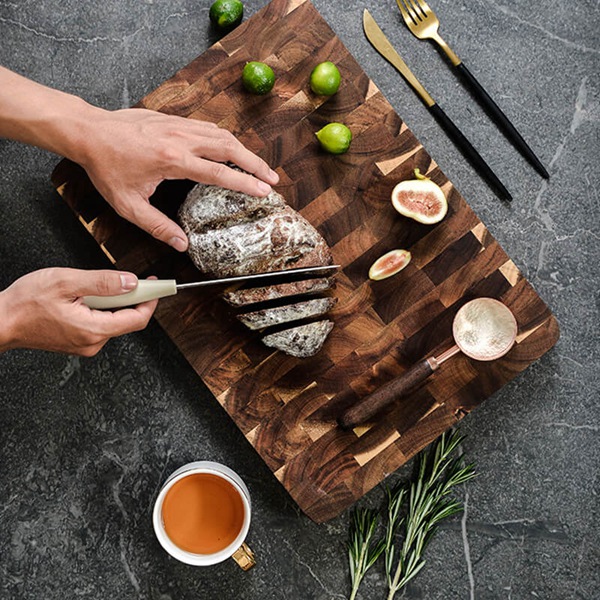
While durable edge-grain boards are widely used, end-grain construction—where the wood fibers face upward—is considered the gold standard for professional chopping blocks. End-grain boards are gentler on knives and have a self-healing quality, but they require higher craftsmanship and careful material selection.
Professional boards must be finished with 100 percent food-grade, non-toxic mineral oil or a beeswax blend. This seals the wood, improves water resistance, and simplifies cleaning. Varnishes or lacquers are never suitable, as they can chip and contaminate food.
Professional-grade boards are thick and heavy, often around 2 inches (5 cm) thick or more. This added mass prevents warping and provides a stable, reliable cutting surface during intensive use.
To maintain performance and longevity, proper care is essential. Chefs follow a simple but disciplined routine:
Clean: Hand wash quickly using mild soap and warm water. Never soak the board or place it in a dishwasher, as prolonged moisture will cause cracking or warping.
Dry: Towel dry immediately and stand the board upright to allow complete air drying.
Oil: Condition the board regularly, about once a month or whenever it appears dry, using food-grade mineral oil. Apply generously, allow it to soak overnight, and wipe off excess oil.
Deodorize: To remove odors, scrub the surface with coarse salt and half a lemon, then rinse and dry thoroughly.
For professional chefs, the decision is clear. A hardwood cutting board is not merely a surface; it is a foundational tool that respects their craft, protects their knives, and performs reliably under pressure. It represents the intersection of tradition, craftsmanship, and proven practical science.
Understanding why chefs insist on hardwood boards is the first step. The next is sourcing products that meet the rigorous demands of commercial kitchens.
Our boards are crafted from dense hardwoods such as acacia, chosen for their hardness, stability, and long service life in busy environments.
We provide OEM and ODM services, allowing restaurant logos, brand names, or specific size requirements to be integrated directly into the board. This transforms a functional tool into part of a brand identity.
As an export-oriented manufacturer, we maintain consistent quality standards and reliable supply capacity, supporting everything from independent restaurants to large hotel groups.
Ready to equip your kitchen with the professional’s choice? Explore our range of premium hardwood cutting boards or contact our team to discuss custom solutions tailored to your business needs. [View Our Professional Cutting Board Collection]