
Making an acacia wood cutting board is a process of turning a stable hardwood into a hygienic, knife-friendly work surface that looks premium on a countertop. The key is not only shaping wood, but controlling moisture, grain direction, glue strength, sanding accuracy, and food-safe finishing so the board stays flat, resists cracking, and cleans easily over time. If you want a ready-to-use, consistent, export-ready option, XinYiLin supplies finished Acacia Wood Cutting Boards with OEM and ODM support for retailers, food brands, gift shops, and project buyers.
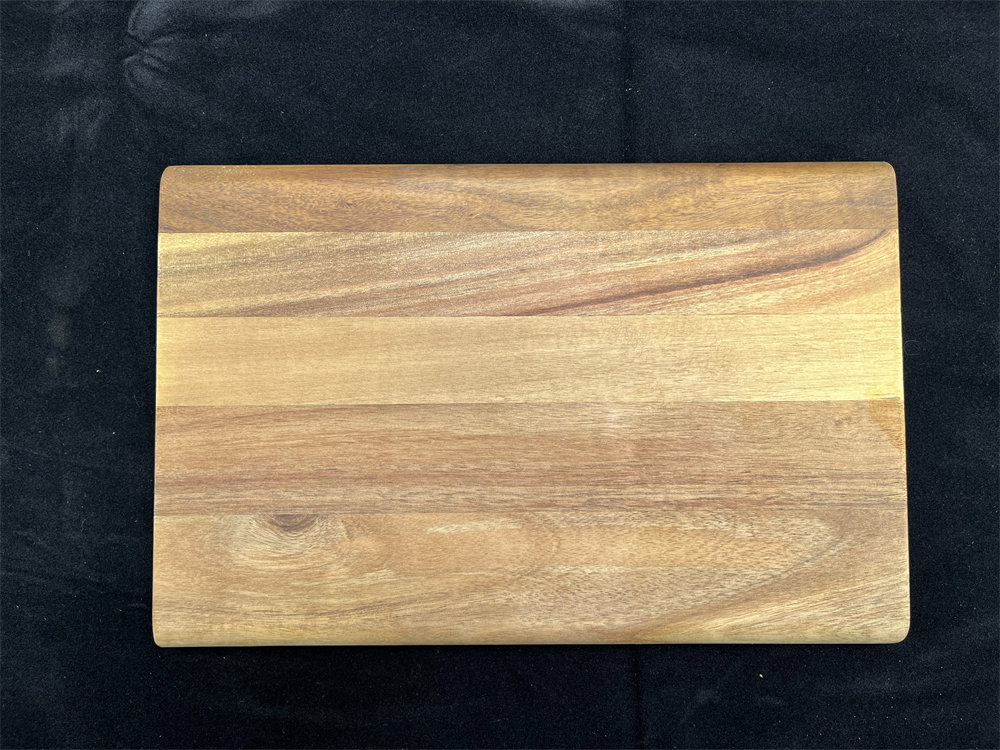
Acacia is widely chosen for cutting boards because it is a dense hardwood with naturally attractive grain, good wear resistance, and a comfortable feel under a knife. A well-made acacia board can hold up to daily chopping while still looking like a presentation piece for serving. The difference between a board that lasts years and one that warps quickly usually comes down to how the wood is dried, how the strips are arranged, and how the finishing and sealing are done.
XinYiLin focuses on wooden kitchenware manufacturing and supports OEM and ODM production for overseas buyers, offering one-stop service from product design to production and delivery.
A cutting board can be made in different styles, but the core requirements stay the same: stable wood, strong glue lines, flatness, and a finish that is safe for food contact.
Acacia hardwood strips or panels, kiln-dried
Waterproof food-contact-safe wood glue that cures hard
Sandpaper in multiple grits
Food-grade mineral oil and optional board wax conditioner
Table saw or track saw for straight, repeatable cuts
Planer or drum sander for thickness consistency
Clamps long enough for panel glue-up
Orbital sander for finishing
Router for edge profiles and optional juice groove
Drill if adding a hanging hole
If you are producing for resale, you also need process controls, moisture checks, batch traceability, and packaging protection to reduce shipping damage. That is where an established manufacturer can save time and reduce returns.
Start with acacia that is properly dried and free from structural defects. For indoor kitchen use, a common target moisture content is around 6 to 10 percent depending on your climate and storage conditions. Wood that is too wet can shrink after production, causing glue-line stress, cupping, or cracking. Wood that is overdried can become brittle and more likely to split during machining.
Select boards with straight grain where possible, and avoid pieces with loose knots in high-stress zones like handles, corners, or thin edges.
Most acacia boards for kitchens are made using one of these structures:
Edge-grain board
Strips are glued side-by-side with the edge facing up. This is a common balance of durability, look, and cost efficiency.
Face-grain board
Wider panels are glued together with the face showing. It looks clean and modern, but can show knife marks more clearly.
End-grain board
Short blocks are arranged with end fibers facing up. It can be extremely knife-friendly but requires tighter process control and more labor.
If you want a stable board with consistent appearance across batches, edge-grain construction is often the most practical choice for mass production.
Cut acacia into strips with consistent width and thickness. Accuracy matters here because uneven strips create gaps, weak glue lines, and extra sanding time.
Before glue-up:
Joint or square edges so the mating surfaces are clean and flat
Dry-fit the arrangement so the pattern looks balanced
Alternate growth ring direction between neighboring strips to reduce the tendency to cup
Apply glue evenly across the mating edges. Use enough pressure to close joints, but not so much that you squeeze out too much glue and starve the bond.
Clamping tips that improve board quality:
Use clamps across the full length, spaced evenly
Use cauls or straight boards on top to keep the panel flat
Wipe away glue squeeze-out after it gels slightly, not immediately, to avoid smearing into the grain
Let the panel cure fully before machining. Rushing this step can cause joint lines to shift during planing or routing.
Once cured, flatten the board and bring it to final thickness. In production, thickness consistency is critical because it affects weight, shipping cost predictability, groove depth accuracy, and handle feel.
If you do not have industrial sanding equipment, repeated light passes and careful checking with a straightedge are safer than aggressive cuts that can tear grain.
Now you can cut the board to final dimensions and add features based on your target market.
Common options:
Rounded corners for comfort and safety
Chamfered or rounded edges to reduce chipping
Juice groove to catch liquids for meats and fruits
Integrated handles or finger holds for easier lifting
Hanging hole for display and storage
For commercial buyers, these details influence usability and customer reviews more than many people expect.
Sanding is where an acacia board becomes premium. A good sequence removes machining marks, closes the feel of the grain, and reduces raised fibers after washing.
A practical sanding progression:
Medium grit to level and remove scratches
Fine grit to smooth the surface and edges
Extra-fine passes on edges and handle zones for comfort
Always sand with the grain where possible. Pay attention to end grain, which absorbs more finish and can feel rough if not refined.
A cutting board finish is not a hard film like furniture varnish. For kitchen boards, the goal is to saturate wood fibers, slow water absorption, and make cleaning easier.
Common finishing method:
Apply food-grade mineral oil generously
Allow it to soak in, then wipe off excess
Repeat until absorption slows
Optionally apply a board wax conditioner for a smoother hand feel and better water beading
Seal all sides evenly, including edges and any grooves. Uneven sealing can cause the board to absorb moisture unevenly and warp.
Even for small batches, consistent inspection reduces rejects and protects reputation.
Check:
Flatness on a reference surface
Smoothness on edges and corners
No glue-line gaps
Clean finish with no sticky residue
Consistent dimensions and thickness
For export supply, protective packaging matters because corners are the first place boards get damaged during transit.
| Process stage | What to control | Why it matters for buyers |
|---|---|---|
| Wood drying | Moisture stability, defect selection | Reduces warping, cracking, and returns |
| Cutting and jointing | Straight, square glue surfaces | Stronger glue lines, cleaner appearance |
| Glue-up | Even glue spread, proper clamp pressure | Prevents gaps and delamination |
| Flattening | Thickness tolerance, panel flatness | Better feel, predictable quality |
| Shaping | Edge safety, groove accuracy | Improves comfort, reduces chipping |
| Sanding | Scratch removal, edge refinement | Better cleaning, higher perceived value |
| Finishing | Food-safe oil saturation, even sealing | Helps resist moisture and staining |
| Packing | Corner protection, clean presentation | Reduces shipping damage |
If you are sourcing boards for retail, gifting, food brands, or project supply, you usually need more than a single design. You need consistent execution across repeated orders, stable lead times, packaging coordination, and the ability to adjust details for different markets.
XinYiLin provides OEM and ODM support for custom sizes, shapes, and feature preferences, one-stop service from design to production and delivery, and export-oriented cooperation built around long-term overseas buyers.
You can start from the Acacia Wood Cutting Board product range and define your required board size, construction preference, and packaging plan.
To make a reliable Acacia Wood Cutting Board, focus on stable dried wood, accurate strip preparation, controlled glue-up, careful flattening, refined sanding, and balanced food-safe finishing on all sides. These steps determine whether the board stays flat, cleans easily, and looks premium after real kitchen use. For buyers who need consistent quality and repeatable production, sourcing from XinYiLin helps turn the same process standards into stable supply for long-term sales.