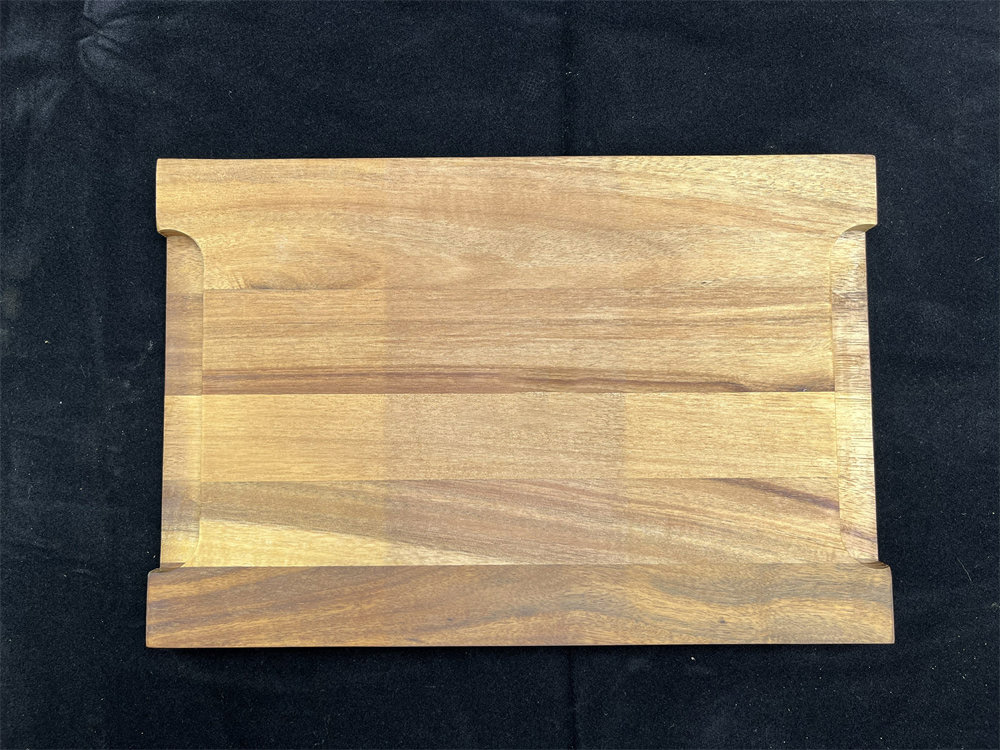
Curing a Wooden Cutting Board means saturating the surface fibers with a food-safe oil or wax blend so the board becomes more water-resistant, less likely to stain, and less prone to cracking or warping over time. A properly cured board also feels smoother under the knife and is easier to clean because moisture and food juices are less able to soak into the grain. Whether the board is brand new or has started to look dry, curing is the most reliable way to extend its working life and keep it looking professional in daily kitchen use.
XINYILIN manufactures boards for home kitchens and commercial settings. If you are selecting a new wooden cutting board or specifying board styles for a project, you can browse our range on the wooden cutting board page.
Curing is not the same as sterilizing. It does not “seal” a board like varnish, and it does not replace proper cleaning after food prep. What curing does is fill microscopic pores in the wood with stable, food-safe oils, slowing down water absorption and reducing the stress cycles that cause hairline cracks. When wood stays dry for too long, it shrinks; when it absorbs too much water, it swells. Repeated shrink-swell movement is what leads to warping and splitting. Curing stabilizes these swings and helps the board stay flatter.
Curing also improves appearance. Dry boards look pale and fuzzy, while cured boards have richer grain contrast and a more even, finished feel.
The most important rule is to use a food-safe oil that remains stable. Many kitchen-safe plant oils can become sticky or rancid because they oxidize and break down. For curing, a refined mineral oil designed for food contact is widely used because it does not turn rancid and it penetrates well. Many users also prefer a blend that includes beeswax because wax forms a thin protective layer on top after the oil has soaked in, giving the board a slightly more water-shedding finish.
If you want a simple, low-risk approach, choose either food-grade mineral oil or a dedicated board conditioner that combines mineral oil and beeswax. This method is consistent for routine maintenance and works across most common hardwood boards.
Before applying oil, the board must be clean and fully dry. If the board has just been washed, let it air-dry upright with good airflow for several hours. Applying oil to damp wood can trap moisture, which creates odor and encourages discoloration at the grain lines.
If the board feels rough, lightly sand it first. Use a fine grit and follow the direction of the grain. Sanding removes raised fibers and opens the surface evenly, which helps oil penetration and creates a smoother finish after curing. After sanding, remove dust completely with a dry cloth. A dusty surface can turn the first oil coat into a gritty paste.
The best curing method is to apply oil in thin, repeated coats. Pour a small amount of oil on the board and spread it across the entire surface with a clean cloth or paper towel. Cover the front, back, edges, and any handle cutouts. Oil absorption is not only about the cutting surface. The edges and underside are where moisture imbalance often causes warping, so they need equal treatment.
Once the board is coated, let it rest flat for at least a few hours. If the wood is very dry, it may absorb oil quickly and look patchy. Add another thin coat where it looks dry, then continue resting. When the board stops absorbing rapidly and the surface looks evenly rich, let it sit longer so the oil can migrate deeper into the fibers.
After resting, wipe off excess oil. Leaving a heavy oily film can feel sticky and attract dust. A properly cured board should feel dry to the touch, not greasy.
If you are using a conditioner that includes wax, or if you apply wax separately, wax is best used after the oil has penetrated. Rub a thin layer of wax blend into the surface using a cloth, focusing on the end grain and edges. Let it sit briefly, then buff until the surface feels smooth and dry.
Wax does not replace oil. Oil penetrates, wax protects the top layer. Together they improve water resistance and reduce staining from strongly colored foods.
A new board often needs more frequent oiling at the beginning because the wood is still thirsty. A practical schedule is to oil daily for several days, then weekly for the first month, then monthly as maintenance. Boards used heavily or washed frequently may need conditioning more often, especially in dry climates.
The table below provides a simple schedule you can follow:
| Board Condition | First Week | First Month | Long-Term Maintenance |
|---|---|---|---|
| New board | Oil once per day for 3–5 days | Oil once per week | Oil once per month |
| Dry-looking board | Oil once per day for 2–3 days | Oil every 1–2 weeks | Oil once per month |
| Heavy-use kitchen | Oil as needed when surface looks pale | Oil every 1–2 weeks | Oil every 2–4 weeks |
Your board will tell you when it needs oil. If it looks dull, feels rough, or absorbs water quickly, it is time to condition.
Many cutting boards fail early because of habits that stress the wood. Soaking in water is one of the most damaging actions. Dishwashers are also harmful because heat, detergent, and long water exposure swell and dry the wood aggressively. Another common mistake is oiling only the top surface. Uneven treatment creates uneven moisture movement, increasing warping risk.
You can avoid most issues by following these practical rules:
Wash quickly with mild soap, then dry immediately
Store upright so both sides dry evenly
Avoid soaking and avoid dishwashers
Re-oil before the board becomes extremely dry
A board does not become permanently sealed, but a properly cured surface has clear signs. Water beads slightly rather than soaking in immediately. The grain looks evenly rich rather than patchy. The surface feels smooth and dry, without oily residue. When you cut on it, the board feels stable rather than fuzzy.
If the board still drinks oil instantly and looks dry within hours, it needs more coats or more time to rest between coats.
Curing a wooden cutting board is a simple maintenance practice that delivers long-term benefits. Clean and dry the board completely, apply thin coats of food-safe oil across all surfaces, allow time for absorption, wipe off excess, then finish with a wax blend if you want extra water resistance. Following a consistent conditioning schedule prevents cracking, reduces warping, and keeps the board looking and performing like a premium kitchen tool.
If you are sourcing boards for a kitchenware line, hospitality project, or bulk order, XINYILIN can support your selection with stable craftsmanship and consistent material control. Browse our wooden cutting board collection and share your preferred size, wood type, and finishing requirement. If you have questions about care, curing frequency, or packaging options, contact us and we can provide practical guidance for your application.