Choosing what wood is good for cutting boards is not only about color or grain. Wood selection affects how the board responds to knife impact, how easily it absorbs moisture, how stable it stays after repeated washing, and how long it can remain smooth without deep grooves. For many kitchens and product programs, two materials consistently deliver a strong balance of performance and aesthetics: acacia wood and beech wood. Both can be made into reliable boards when drying, lamination, and finishing are controlled to a consistent standard, and both fit well in long-term product lines where durability and repeatability matter.
A cutting board must handle daily wear while staying safe and easy to maintain. Several wood properties matter more than appearance alone.
Hardness influences dent resistance and surface longevity. If a wood is too soft, knife marks become deep quickly and the board may develop grooves that hold moisture and residue. If a wood is extremely hard, it can feel harsh under the blade and may contribute to faster edge dulling. A balanced hardness is usually preferred for practical kitchen use.
Grain structure affects cleaning and moisture behavior. Tighter grain typically absorbs less water and is easier to wipe clean. Stability matters because boards go through wet-dry cycles. If the wood moves too much with humidity changes, the board can warp, split, or develop raised joints over time. Finally, finish compatibility matters because a board must accept oiling and conditioning evenly to maintain its surface.
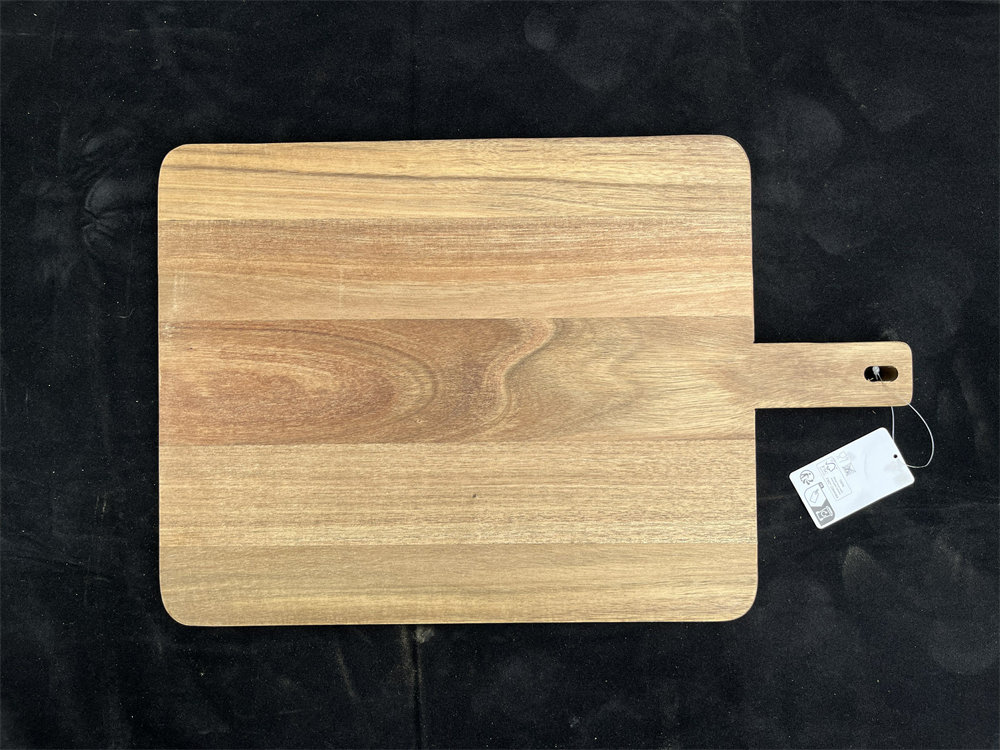
Acacia wood is often chosen for cutting boards because it combines a dense feel with a distinctive, premium appearance. In day-to-day use, acacia surfaces tend to resist heavy denting, making them suitable for frequent chopping, slicing, and food prep routines. The natural contrast in the grain pattern also gives acacia boards a strong visual identity, which is why they are widely used in kitchens where the board may sit on the counter as a functional display piece.
Acacia boards commonly use laminated construction. When properly dried and assembled, lamination can improve dimensional stability by balancing grain directions and reducing the risk of large-scale warping. This matters for a board that may be washed multiple times per day, then left to dry in a changing indoor environment. The result is a board that can stay flatter and feel more solid across repeated use cycles.
Acacia also tends to perform well when the surface is conditioned consistently. Regular oiling helps reduce rapid moisture exchange, which is one of the main reasons wooden boards show surface dryness. With correct care, an acacia board can maintain a smooth feel and attractive tone for a long service life, making it a practical option for both everyday prep and presentation-focused kitchens.
Beech wood is a classic cutting board material valued for its uniform texture and reliable workability. A beech surface usually feels smooth and controlled under the knife, which suits daily kitchen routines where consistent cutting feedback matters. Its visual tone is typically lighter and more even than highly contrasting woods, which works well for clean, minimalist product lines and standardized assortments.
Beech is often selected for programs that require consistent supply and predictable production results. The grain tends to be uniform, which supports stable finishing outcomes across batches. For buyers who need repeatable sizing, consistent thickness control, and steady appearance across multiple shipments, beech can be a strong foundation material.
In long-term use, beech boards perform best when they are protected from prolonged soaking and dried evenly. Like most wooden boards, beech benefits from routine conditioning to maintain surface stability. When maintained correctly, beech boards can remain flat, smooth, and visually consistent, which is why they are widely used in practical kitchen setups.
Acacia and beech both work well, but they suit slightly different preferences and positioning.
Acacia often appeals to buyers who want bold grain character and a heavier, more premium countertop presence. Beech is often chosen when consistency, uniform appearance, and balanced cutting feel are priorities. For a product range that includes multiple sizes or repeated reorders, both materials can support stable output when manufacturing controls are strong.
| Item | Acacia Wood | Beech Wood |
|---|---|---|
| Appearance | Natural contrast, premium grain | Light tone, uniform texture |
| Cutting feel | Dense and solid | Smooth and balanced |
| Typical positioning | Prep plus presentation | Daily prep, consistent programs |
| Care focus | Regular conditioning | Avoid soaking, condition routinely |
| Production advantage | Strong visual identity | Stable batch-to-batch look |
Wood species matters, but construction style also changes how a board performs.
Edge-grain boards show the long grain on the cutting surface. They are widely used because they provide a strong balance of durability and manageable weight. With good lamination and finishing, edge-grain boards suit most daily kitchens and remain easy to store and handle.
End-grain boards expose wood fibers vertically. This structure can reduce visible knife marks and provide a more forgiving cutting feel, especially for frequent chopping. End-grain boards are usually thicker and heavier, and they rely more heavily on correct drying and precision assembly. When the goal is higher-end performance and longer surface life, end-grain can be a strong choice, provided manufacturing quality is consistent.
For many programs, custom cutting boards are offered in both constructions, allowing the range to cover everyday practicality and premium performance in the same category.
Woods such as maple, walnut, or teak may appear in the market depending on style preference and local supply. Maple is often known for its clean look, walnut for its darker tone, and teak for moisture resistance. These can be useful as supporting options in certain collections, but for many buyers and repeat programs, acacia and beech remain practical priorities because they combine durability, availability, and production-friendly consistency.
A cutting board’s longevity depends on more than the species label. Several production and product details should be evaluated.
Thickness affects stability. Thicker boards tend to resist warping better and feel more secure during chopping. Edge finishing matters because well-rounded edges reduce chipping and improve handling comfort. Lamination quality matters because poorly bonded joints can separate over time, especially with frequent washing. Surface finishing should be smooth without a sealed plastic-like layer, allowing oil to absorb evenly and support long-term conditioning.
If a board will be part of a repeated supply plan, consistency across batches becomes a core selection factor. That is where material control and stable production standards become more important than chasing rare wood species.
Even the best wood can degrade quickly if the board is treated like a plastic item. To reduce fading in appearance, surface roughness, and warping, the maintenance routine needs to match the reality of wooden materials.
Wash with mild soap and water, then dry immediately. Avoid dishwashers because high heat and prolonged water exposure can stress the wood. Do not soak in a sink because one-sided saturation often leads to warping. Dry the board upright so both faces dry evenly. Condition the surface with food-safe oil regularly, especially when the board looks dry or feels less smooth.
With correct care, both acacia wood cutting boards and beech wood cutting boards can stay stable and attractive for long-term daily use.
If you are deciding what wood is good for cutting boards, acacia and beech remain two of the most practical and widely trusted choices. Acacia provides a dense surface and premium grain character that suits both prep and presentation, while beech offers uniform texture and consistent performance that fits standardized daily use. When paired with controlled production and correct maintenance guidance, both materials support long-term stability, smooth cutting feel, and reliable kitchen performance.
If you have questions about sizing, construction type, or how to choose the right wood for your use scenario, contact XINYILIN. Share your target dimensions and requirements, and we can provide practical guidance and production-ready options to support your selection.