Choosing the right wood is one of the first things serious buyers look at when sourcing a cutting board. The question sounds simple, but for importers, brand owners, wholesalers, and kitchenware buyers, it affects much more than appearance. The wood species influences durability, knife friendliness, moisture resistance, product positioning, and long-term customer satisfaction. That is why the topic what is the best wood for a cutting board matters not only to retail users, but also to buyers planning OEM programs, custom collections, and steady bulk orders.
In today’s kitchenware market, buyers are no longer looking for a board that only looks natural on a shelf. They want a product that performs well in daily use, carries stable quality across production runs, and can support private label or customized development. This is exactly why custom wood cutting boards continue to hold strong demand. They allow buyers to balance function, design, branding, and market positioning in one product line.
When discussing the best wood for a cutting board, acacia often comes up for practical reasons. It has a warm grain, a solid feel in hand, and a good balance between appearance and daily usability. For buyers working with serving boards, kitchen boards, or gift-oriented collections, acacia offers a commercial advantage because it works well in both functional and decorative applications.
A cutting board is one of those products that seems easy to source until real problems start showing up after shipment. Some boards crack too easily. Some stain too fast. Some are too soft and scar quickly under repeated knife use. Others may look nice in the sample stage but show uneven finish, unstable color, or shape variation in mass production.
For B-end buyers, these are not small issues. They directly affect returns, complaint rates, and reorder confidence. A board that absorbs moisture too quickly or warps in storage can create trouble for distributors and retailers. A board that looks inconsistent from one production batch to another can weaken a private label program. This is why experienced buyers focus on wood species early in the sourcing process.
The best wood is not simply the hardest one. A cutting board also needs to protect knife edges, stay reasonably stable under kitchen conditions, and maintain a clean appearance after repeated use. Buyers who only compare price per piece often miss the bigger cost. If quality is not stable, the savings from a lower quote can easily disappear in claims, replacements, and lost trust from downstream customers.
A good cutting board wood needs a balanced set of qualities. It should be dense enough to handle daily chopping and slicing, but not so hard that it becomes rough on knives. It should resist cracking and excessive movement when kitchen humidity changes. It should also accept surface finishing well, because finish quality influences both appearance and maintenance.
Grain structure also matters. A wood with attractive and consistent grain helps the product sell better, especially in markets where the board is used not only for food prep but also for serving. This is why many buyers look for boards that can move across different retail scenarios, from home kitchen use to charcuterie and table presentation.
Acacia performs well in this discussion because it gives buyers a commercially useful mix of durability, natural texture, and visual appeal. It does not feel overly plain, and it works in designs that need a warmer, more premium presentation. For many brands, that makes it easier to position the product in mid-range or higher-value collections.
When asking what is the best wood for a cutting board, there is no single answer for every market. But acacia remains one of the strongest options for many practical business reasons. It has the natural beauty that buyers want for shelf presentation, and it also delivers the strength needed for daily kitchen use.
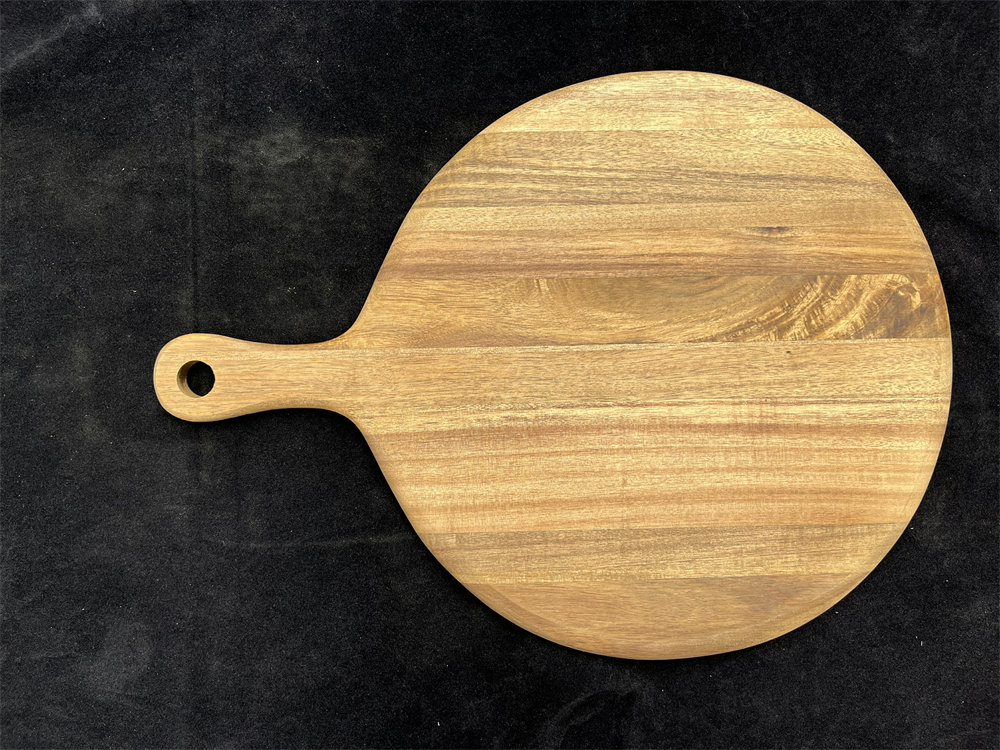
Our product fits this direction well. It uses acacia wood and combines function with a paddle-style shape that gives the board more than one selling angle. It can be used for cutting, serving, display, and food presentation, which gives buyers more flexibility when building a product range. This is especially useful for businesses that want one item to serve both kitchen prep and tabletop use.
The larger paddle shape also helps the product stand out in visual merchandising. In many markets, buyers are not only sourcing a cutting board. They are looking for a board that feels like a finished product rather than a basic commodity. A stronger presentation can make a noticeable difference in gift collections, hospitality supply, and branded kitchenware programs.
Another reason acacia works well is that it supports a natural-looking finish. Buyers in overseas markets often prefer products that feel authentic and easy to maintain. A board that highlights the grain and shape of the wood often has broader appeal than one that feels too industrial or generic.
For many professional buyers, the real question is not just what wood to use, but how that wood can support a stronger product strategy. This is where custom wood cutting boards become important. A standard item may work for short-term trading, but customization is often what creates stronger margins and longer customer retention.
Private label buyers may need custom shape, logo placement, packaging, finish, or size adjustments. Importers may want to match a board style with an existing kitchenware line. Hospitality and promotional buyers may care more about presentation, uniformity, and brand expression. In all of these cases, sourcing from a supplier with OEM / ODM experience is more efficient than trying to adapt a ready-made product with limited flexibility.
This is also one of the common pain points in the market. Some suppliers can offer attractive samples but struggle once the buyer requests consistent customization in bulk. Dimensions change slightly, color tone varies, finishing becomes unstable, or communication slows down when revisions are needed. For buyers handling repeated shipments, this causes planning problems far beyond the product itself.
A supplier that understands custom wood cutting boards from both a manufacturing and project perspective can help reduce these risks. The value is not only in producing the board. It is in keeping the shape, finish, material, and packaging aligned through multiple orders.
Our extra large paddle-shaped acacia cutting board is a good example of how wood choice and product design work together. The acacia material gives the board a natural and durable base, while the larger paddle format expands how the product can be marketed. It fits kitchen prep use, food serving, grazing presentation, and gift-oriented product lines more naturally than a plain rectangular board.
For buyers, that matters because product versatility improves sell-through potential. One design can work across more channels, from retail kitchenware to hotel supply and promotional packaging. This reduces the pressure to stock too many similar items while still giving customers a product that feels distinctive.
This product direction also suits OEM / ODM development. Buyers who want to build a broader serving board or chopping board range can use this shape as a starting point for branded collections. Adjustments in surface finish, packaging, dimensions, and logo presentation can help create stronger identity in competitive markets.
On the supply side, practical details also matter. Bulk buyers usually pay attention to MOQ, lead time, packing stability, and finish consistency because these affect landed cost and stock planning just as much as the material itself. A board may look attractive in a showroom, but if it cannot be supplied steadily, it becomes difficult to build into a serious product program.
Before placing orders, buyers should look beyond the wood name alone. A cutting board is not judged only by species. The finish, thickness, edge treatment, moisture control, and overall consistency all affect market performance. Even a good wood can perform poorly if manufacturing details are unstable.
This is especially true for larger-size boards. Bigger boards create stronger visual impact, but they also require better control during production and finishing. If the board is not processed carefully, buyers may face warping concerns, uneven edges, or appearance variation from batch to batch. These issues are frustrating because they often show up after the goods arrive, when correction is no longer easy.
That is why many experienced buyers prefer working with a supplier that can support the project from development through delivery. When the product is intended for private label, wholesale distribution, or long-term replenishment, the supplier’s process discipline becomes part of the product value.
So, what is the best wood for a cutting board? For many practical sourcing needs, acacia is one of the strongest choices because it offers a useful balance of appearance, durability, and commercial versatility. It works well for buyers who want a board that performs in the kitchen while still carrying strong presentation value in the market.
For businesses developing custom wood cutting boards, the better decision is not only about choosing the right wood. It is also about choosing a supplier that can support stable production, OEM / ODM cooperation, and clear communication from sampling to shipment.
If you are planning a kitchenware line, reviewing paddle board designs, or looking for a dependable supplier for acacia wood cutting boards, send us your size, finish, branding, or packaging requirements. We can help you refine the product direction, evaluate workable options, and support your project with practical guidance before mass production begins.