Tough meat usually comes down to tight muscle fibers and uneven thickness. If these are not handled before cooking, the final result can feel dry and chewy. For kitchens, food brands, and wholesale buyers, improving meat texture is not only about cooking skills. It also depends on using the right preparation tools that deliver consistent results.
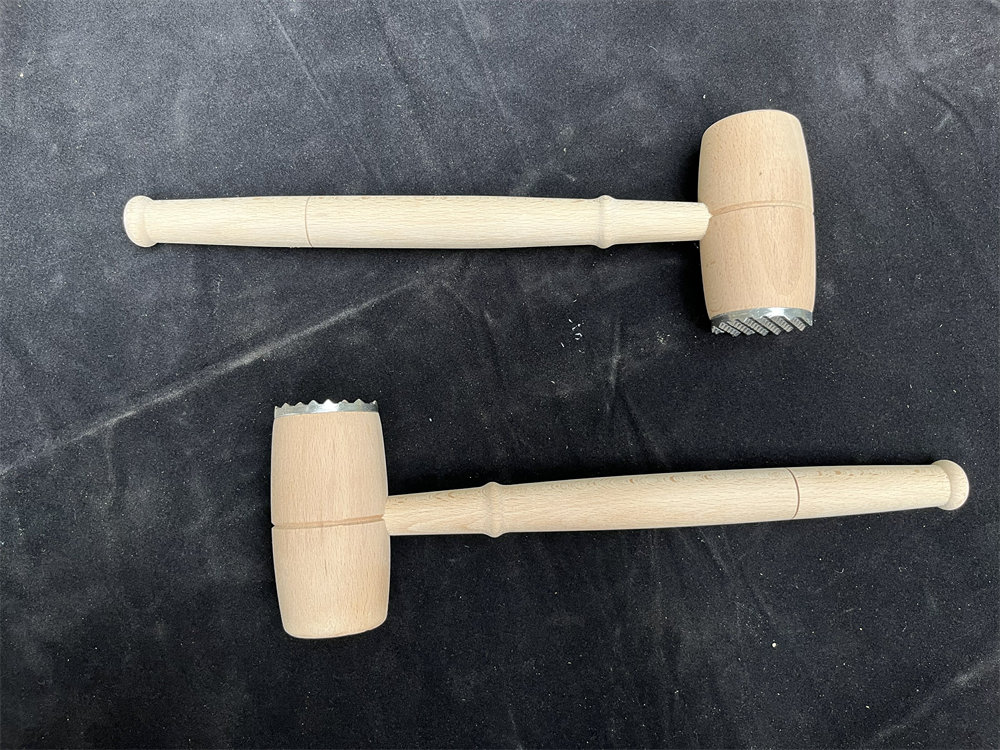
A meat tenderizer hammer is one of the most direct and reliable tools for this job. Our Wooden Meat Tenderizer Hammer combines a solid beech wood handle with a dual-head design, making it suitable for both tenderizing and flattening. It works well in home kitchens, restaurants, and meat preparation environments, which makes it practical for both retail and bulk supply.
Tenderizing works by loosening the structure of the meat. When pressure is applied evenly across the surface, the fibers begin to separate slightly. This helps the meat cook more evenly and improves the final texture.
The textured side of a hammer is used to soften tougher cuts, while the flat side helps create an even thickness. This is especially useful for dishes like steak, pork chops, and chicken breast where even cooking makes a clear difference.
A well-balanced tool makes this process easier. The dual-head design allows users to switch between functions without changing tools, which improves efficiency in both home and commercial kitchens.
In many kitchens, tenderizing is not a one-time task. It is part of daily preparation. This is why durability and handling comfort matter more than appearance alone.
A commercial meat tenderizer tool should feel stable in the hand and maintain its performance over time. If the handle is weak or the hammer head wears out quickly, it creates problems in daily use.
Our wooden hammer uses beech wood for the handle, which gives a firm grip and a natural feel. The metal striking surface is designed to hold its shape under repeated use. This makes it suitable for environments where the tool is used frequently, such as restaurants and food preparation areas.
Tenderizing is not limited to one type of meat. It is commonly used for beef, chicken, and pork. Each type benefits in a slightly different way.
Steak becomes easier to chew and cooks more evenly
Chicken breast can be flattened for consistent frying or grilling
Pork chops become softer and absorb seasoning better
This flexibility is important for buyers who supply multiple markets. A tool that works across different cooking styles is easier to sell and easier to include in a wider kitchenware range.
Kitchen tools that come into contact with raw meat must be easy to clean and safe to use. A smooth handle and a solid hammer head help reduce residue buildup and make cleaning more straightforward.
Wooden handles are widely used because they provide a comfortable grip and a natural look that fits well in both modern and traditional kitchens. When paired with a properly finished surface, they can handle regular washing and drying without becoming rough or uncomfortable.
For food-related products, this is a key concern for distributors and importers. Cleanability and food-contact safety directly affect customer trust and long-term product performance.
A meat hammer should not be too heavy or too light. If it is too heavy, it becomes difficult to control. If it is too light, it may not deliver enough force to be effective.
A balanced structure helps users apply consistent pressure without damaging the meat. This is especially important in commercial kitchens where speed and consistency are both required.
The length and weight of the tool should allow for controlled movement, making it easier to repeat the same action across multiple portions.
For wholesale buyers and brand owners, one of the biggest challenges is maintaining consistent quality across large orders. Differences in material, finish, or assembly can lead to complaints and affect long-term cooperation.
A stable production process helps ensure that each piece follows the same standard. This is important for supermarket programs, kitchenware distributors, and private label projects where product consistency is closely tied to brand reputation.
Custom options such as logo marking, packaging adjustments, or size variations are also part of many bulk orders. A supplier that can handle these requirements makes it easier for buyers to build a complete product line rather than sourcing from multiple factories.
A meat tenderizer is a simple tool, but it fits into several different markets at once. It is used in home cooking, restaurant kitchens, butcher shops, and outdoor cooking setups.
This makes it a flexible product for importers and wholesalers. It can be sold as a standalone kitchen tool or combined with other Wooden Utensils as part of a larger product range.
Products with wider application are usually easier to promote and easier to reorder, especially when they meet both daily use and commercial requirements.
Making meat more tender before cooking starts with proper preparation. Using the right tool helps break down fibers, improve texture, and create more consistent cooking results. A well-designed meat tenderizer should be durable, easy to handle, and suitable for repeated use.
Our Wooden Meat Tenderizer Hammer is made to support these needs, offering a balanced structure and reliable performance across different kitchen environments. If you are sourcing kitchen tools for retail, wholesale, or custom programs, feel free to contact us. We can help you choose a solution that fits your product range and market requirements.