A wooden serving item may look simple, but commercial buyers cannot treat it like ordinary décor. Once it touches bread, fruit, cheese, pizza, pastries, cooked food, or café snacks, the tray becomes part of the food-contact environment. If the material, coating, glue, finish, cleaning method, or packaging documentation is unclear, the buyer may face more than a quality complaint. The risk can move into compliance checks, rejected shipments, customer claims, and brand trust problems.
For restaurant supply buyers, hotel tableware distributors, bakery chains, café operators, catering suppliers, and wooden kitchenware wholesalers, a wooden round tray should be reviewed from the food-contact side first. Shape and wood grain matter, but safety, surface treatment, durability, and documentation decide whether the item can be used confidently in commercial service.
Commercial food service is different from home use. A tray may be handled by different staff, washed repeatedly, stacked in storage, exposed to moisture, and used for different food items throughout the day. The wood should be stable enough to handle this rhythm without cracking, warping, or creating rough areas that trap residue.
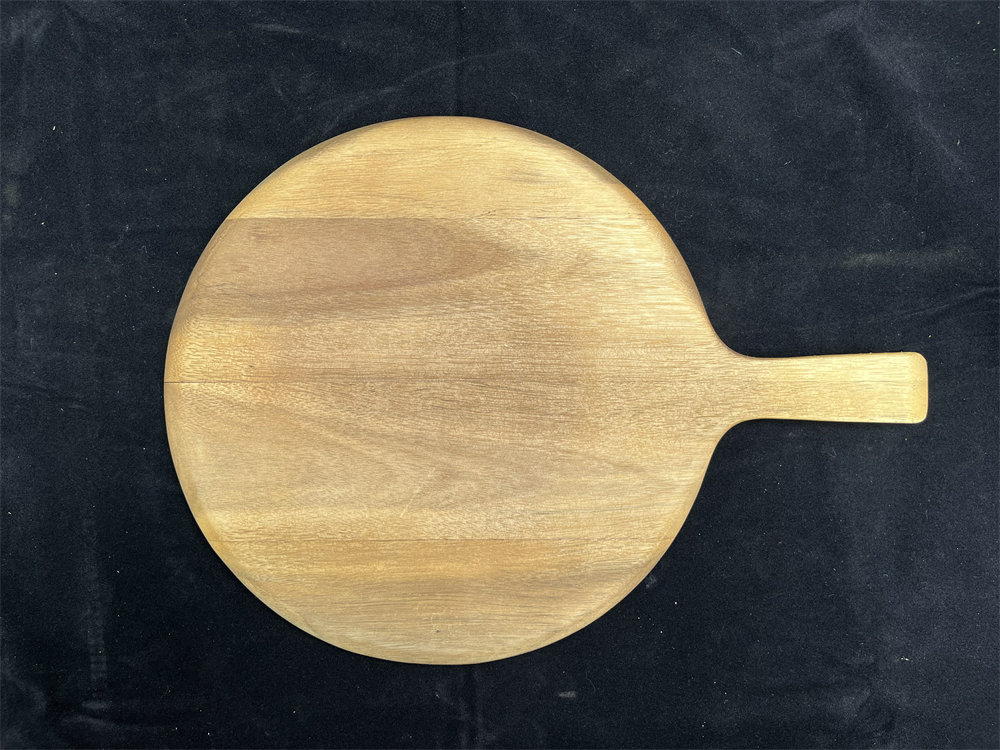
Our acacia wood serving board uses natural acacia wood with a round shape and handle design. Acacia is often chosen for wooden kitchenware because it has a firm texture and attractive grain, making it suitable for serving, cutting, and tabletop presentation when properly finished and maintained.
For food-contact wooden items, buyers should know whether the product uses whole wood, spliced wood, glue, coating, metal parts, or decorative elements. Any material that touches food or sits near food should be reviewed before bulk purchasing.
A tray used only for wrapped goods may have different requirements from one used for direct contact with bread, cheese, fruit, or baked products. Commercial buyers should define the actual food-contact condition before confirming the order.
A beautiful surface is not enough for food service. The finish must be suitable for how the tray will be used. A café serving dry pastries has different needs from a butcher shop, a bakery counter, or a catering service using oily snacks.
Our round acacia board can be finished with lacquer or edible grade oil. For direct food contact, buyers should confirm which finish is suitable for their market, product category, cleaning method, and compliance requirement. This step should happen before production, not after the goods are ready to ship.
A tray with rough sanding, open cracks, or uneven coating may collect crumbs, oil, moisture, or food residue. In commercial service, that creates cleaning difficulty and can lead to customer complaints.
A smooth, well-finished surface helps staff wipe and maintain the tray more easily. It also helps the item keep a cleaner appearance during repeated use in cafés, restaurants, bakeries, and catering setups.
A round tray is often used for pizza, bread, cheese, desserts, fruit, or shared serving. If the size is too small, staff may overload it. If it is too large, storage and handling become less efficient.
The round acacia board is available in a φ30×1.3cm size direction, which can suit pizza serving, bakery display, café snacks, and tabletop food presentation. For buyers planning larger food service use, customized length, width, and handle shape can be discussed according to the serving scene.
A handle makes the item easier to lift, pass, and hang for storage. In busy service environments, this detail matters. Staff may need to move trays quickly between preparation tables, display counters, and customer areas.
The handle should feel stable, smooth, and comfortable enough for repeated use. If the handle edge is rough or weak, staff may avoid using it, or the tray may create safety concerns during service.
Food-contact safety requirements can differ by market. A buyer selling to cafés in one country may need different documentation from a hotel supplier exporting to another region. Before ordering, buyers should request suitable material, finish, and food-contact information for the destination market.
This is especially important for distributors and wholesalers. If the tray enters several sales channels, unclear documentation may slow down customs review, buyer approval, or customer onboarding.
A simple appearance inspection is not enough. Buyers should test the tray with the food items and service habits they expect: dry pastries, oily snacks, cheese boards, fruit, pizza, bread, or wrapped foods.
Useful checks include surface odor, coating feel, oil contact, water contact, staining, wiping, drying speed, and whether the tray becomes rough after cleaning. A wooden round tray used in commercial service should be tested under real handling, not only checked when new.
Wooden food-contact items need proper cleaning and drying. Long soaking, harsh chemicals, and poor ventilation can damage the surface, increase deformation risk, and reduce service life.
For cafés, bakeries, restaurants, and catering companies, staff training is part of product safety. The tray should be rinsed or wiped properly, dried in a ventilated place, and stored away from long-term moisture.
Wooden trays and serving boards may need periodic care depending on the finish and usage intensity. If the surface becomes dry, rough, or stained, the tray may no longer look suitable for front-of-house service.
Commercial buyers should plan maintenance instructions together with the purchase. This helps end users keep the product in better condition and reduces unnecessary complaints.
Wooden trays can be damaged by moisture, pressure, rubbing, or poor carton handling during transport. Surface scratches, edge dents, or deformed handles can affect commercial acceptance before the product even enters service.
The packing direction can include poly bag, inner box, and export carton. For bulk buyers, packing should be selected according to shipment distance, retail requirements, warehouse handling, and whether the product will be sold as a single item or supplied to hospitality projects.
Logo engraving can help restaurants, hotels, gift channels, and retail sellers build brand recognition. But the logo position should not create cleaning difficulty or food residue traps.
For food service use, buyers should confirm whether branding is placed on the handle, back side, packaging, or display area. A good branding plan should support commercial presentation without weakening practical cleaning.
A wooden round tray for commercial food service should be chosen by more than shape, color, or wood grain. Buyers need to confirm material stability, surface finish, food-contact suitability, cleaning method, size, handle comfort, packing protection, and required documentation for the target market.
If your business needs wooden serving trays, acacia boards, bakery display boards, café serving items, or food-contact wooden kitchenware for wholesale or hospitality supply, come to us to prepare this product properly. Send the target food use, tray size, finish requirement, logo plan, packing method, compliance documents needed, and order quantity. Our team can help match the wooden tray specification with your commercial use scene, so the product is easier to approve, easier to sell, and safer for food service buyers.