In catering kitchens, Wooden Utensils are replaced faster than many buyers expect. The reason is not only heavy cooking. Many replacements happen because the tool no longer feels safe for food handling: the surface becomes rough, the edge cracks, the handle absorbs stains, or staff are unsure whether the utensil can still pass internal hygiene checks.
For catering companies, restaurant supply buyers, hotel kitchen distributors, and wooden kitchenware wholesalers, a Cooking Spoon wooden turner should be reviewed from a food-contact safety angle before bulk purchasing. A low-cost tool may look acceptable in the first shipment, but if it fails during repeated use, cleaning, or compliance review, replacement cost and customer complaints can rise quickly.
A wooden spoon may still be usable, but once the surface becomes rough, kitchen staff may stop trusting it. Rough areas can trap sauce, oil, starch, and seasoning residue. In a commercial kitchen, that creates cleaning pressure and makes the utensil look older than it really is.
For food service buyers, the problem is practical. If a tool looks hard to clean, staff replace it earlier. A smoother wooden surface helps the utensil stay acceptable for longer daily use.
A small crack on a wooden utensil can quickly become a hygiene concern. Moisture may enter the crack, food residue may stay inside, and cleaning becomes more difficult. For catering teams working under inspection rules, cracked utensils are often removed from service even before they completely break.
This is why replacement frequency is tied closely to surface condition, not only physical strength.
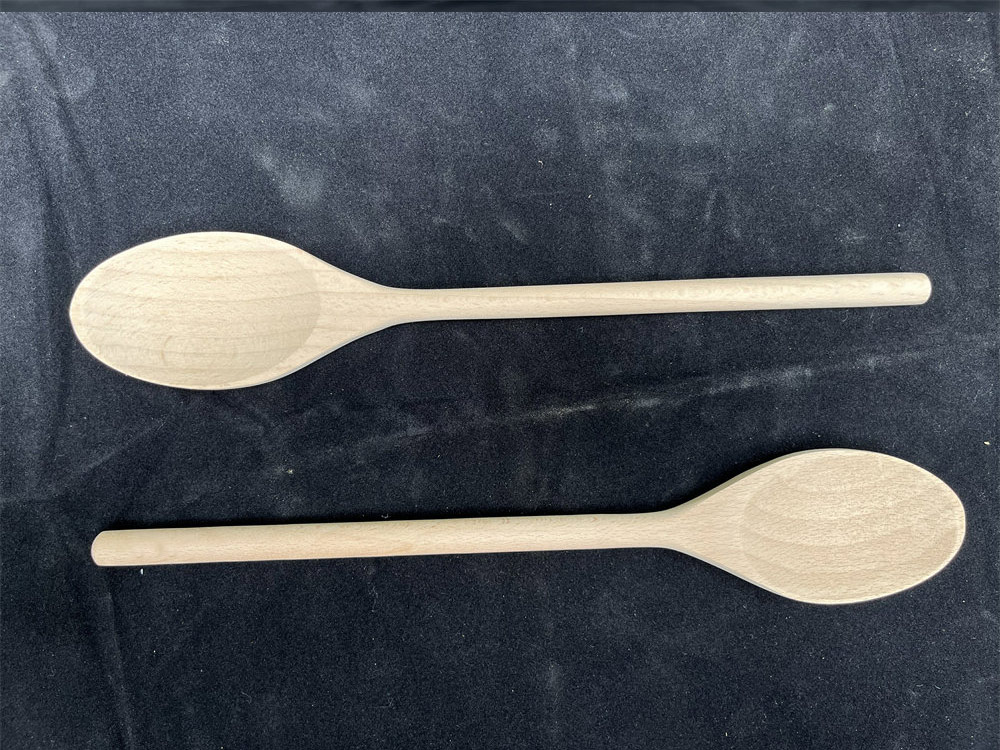
Our 300mm beech wood cooking spoon uses beech wood with a natural finish. For catering buyers, beech wood offers a practical balance between firmness, smooth texture, and comfortable handling in daily kitchen work.
A catering utensil should not feel too soft when stirring thick sauces or too harsh when touching cookware. A stable wooden body helps the tool keep its shape during repeated stirring, mixing, and turning.
Food-contact wooden tools should not depend only on appearance. The surface treatment, cleaning method, drying habit, and storage environment all affect service life.
For bulk supply, buyers should prepare simple care instructions for end users: hand wash, dry promptly, avoid long soaking, and store in a ventilated area. These small instructions can reduce avoidable damage and extend usable life in commercial kitchens.
A 300mm handle gives staff more distance from steam, hot sauce, oil splash, and deep cookware. In catering kitchens, this matters because tools are used repeatedly during long preparation periods.
When the handle is too short, workers may hold the tool awkwardly, place it too close to heat, or leave it inside hot pots. Over time, this can increase surface damage and shorten service life.
A wooden utensil that feels comfortable is less likely to be misused. If the grip is too thin, too slippery, or poorly shaped, staff may apply uneven force while stirring or turning food. That can cause early edge wear or handle stress.
For a Cooking Spoon Wooden Turner, comfort is part of durability. A better-handled tool is used more naturally, cleaned more consistently, and replaced less often.
Rounded edges reduce harsh scraping against pans and bowls. This matters for kitchens that use coated cookware, stainless steel pots, ceramic bowls, or sauce pans during daily prep.
If the edge is too sharp or poorly sanded, it may wear faster and create rough contact points. A clean rounded edge helps the utensil move through sauces, vegetables, batter, or cooked ingredients without feeling aggressive.
Catering kitchens often need one tool to handle several tasks: stirring soup, mixing sauces, folding ingredients, moving soft foods, and portioning small batches. A spoon shape that is too narrow may not move enough food. A shape that is too bulky may feel difficult to control.
The right shape reduces staff frustration and prevents the tool from being forced into tasks it cannot handle well.
Wooden utensils can be scratched or dented during transport if packing is weak. Once a spoon arrives with surface marks, the buyer may already question whether it is suitable for food-contact use.
For wholesale buyers, packing is part of product quality. Poly bag, inner box, and export carton packing can help keep utensils cleaner and better protected before they reach restaurant supply stores, hotel kitchens, catering buyers, or retail channels.
Catering suppliers usually do not want a batch where some pieces look smooth and others look rough. Inconsistent sanding, uneven color, or damaged edges make the buyer sort the goods before resale or distribution.
Consistent finishing helps the product enter the supply chain faster and reduces complaints from downstream customers.
Different markets may have different expectations for wooden kitchen tools. Before placing a bulk order, buyers should clarify the intended use: restaurant kitchen, catering service, home kitchen retail, hotel supply, or promotional kitchenware.
The intended use affects what documents, finishing method, packaging, and maintenance instructions may be needed. It is better to confirm these details before production than to face questions after the goods arrive.
A showroom sample cannot fully reflect catering use. Buyers should test the utensil with hot soups, sauces, oil-based dishes, batter, and repeated washing. They should also check whether the surface stays smooth after drying and whether the handle remains comfortable during long use.
Real-use testing helps reduce the risk of early replacement and customer complaints after bulk supply.
A Cooking Spoon Wooden Turner can help catering companies reduce tool replacement frequency when the material, surface finish, edge smoothness, handle length, packing, and care instructions are planned for real food-service use. The best utensil is not only the one that looks natural. It is the one staff can clean, dry, store, and use repeatedly without losing confidence in food-contact safety.
If your business needs wooden cooking spoons for catering supply, restaurant kitchens, hotel kitchenware, retail kitchen tool sets, or wholesale distribution, come to us to prepare this product properly. Send the target market, food-contact requirement, preferred size, packing method, logo plan, and order quantity. Our team can help match wooden utensil options that are easier to approve, easier to supply, and less likely to create early replacement pressure for commercial buyers.