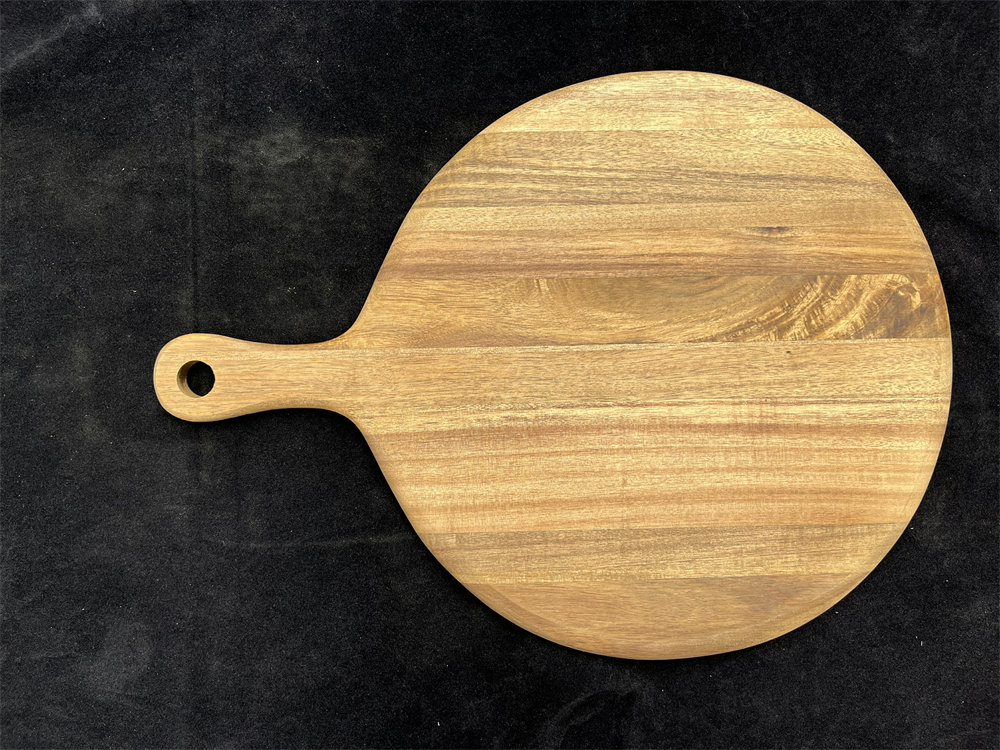
Wooden chopping boards sell well in kitchenware channels because they look natural, feel solid, and fit both home cooking and food service display. Yet many wholesalers face the same problem after shipment: boards that looked acceptable during sampling begin to crack, bend, or split after customers start using them.
For kitchen equipment wholesalers, the real challenge is not finding round wooden chopping boards at a low price. The harder task is finding boards that can survive storage, transport, dry indoor air, wet cleaning routines, and repeated kitchen use without creating return claims.
Wood is a natural material, so moisture control matters from raw board selection to final packing. When the internal moisture level is not stable, the board may react quickly after arriving in a different climate.
A wholesaler may not see the issue immediately after receiving goods. Cracks often appear later, after the boards are stored in a dry warehouse, displayed under strong lighting, or used in kitchens where washing and drying happen every day.
Some boards are priced aggressively because the supplier reduces time in wood selection, drying control, or surface processing. The product may still look attractive in a photo, but internal stress remains inside the material.
For wholesalers, this creates a dangerous situation. The selling price may look profitable at first, but customer complaints, replacement costs, and damaged channel reputation can erase that margin quickly.
Round boards look simple, but the shape requires careful edge finishing. If the edge is too sharp, too thin, or poorly sanded, small cracks may start from the outer rim during daily use.
This is especially important for round wooden chopping boards sold through kitchenware retailers, restaurant supply stores, and online wholesale channels. Customers often notice edge cracking first because it affects both appearance and perceived quality.
A wooden board may bend when one side absorbs or loses moisture faster than the other side. Round boards are more visible when deformation appears because they are often placed flat on countertops, shelves, or display tables.
For wholesalers, even slight warping can lead to return requests. Customers may describe the board as unstable, uneven, or unsuitable for food preparation.
Acacia wood is commonly selected for cutting boards because it has a firm structure and attractive natural grain. For wholesalers, this material can support a more premium market position than soft, unstable wood options.
The value is not only appearance. A well-processed acacia board can better support repeated cutting, serving, washing, and drying routines when moisture control and finishing are handled properly.
wooden kitchenware is often purchased not only for function, but also for presentation. Natural grain variation gives each board a more individual look, which helps retailers avoid selling products that appear too generic.
For buyers reviewing different wooden board options, our acacia wood cutting board shows how material texture, larger usable space, and practical serving value can support a stronger kitchenware selection beyond basic low-price boards.
A shipment can pass initial inspection and still create complaints later. Cracking and deformation may appear after the board experiences temperature change, dry storage, wet cleaning, or repeated use.
This is why wholesalers should not judge quality only by surface appearance at arrival. The more important question is whether the board has been processed for real kitchen conditions.
When a board cracks, the problem does not stop at one refund. Retailers may question the wholesaler’s sourcing standard. Restaurant buyers may hesitate to reorder. Online sellers may receive negative reviews that affect future sales.
For wholesalers handling repeat kitchenware supply, reducing cracking risk is directly connected to channel stability.
A smooth and even surface is not only about touch. Poor sanding can leave weak areas where water enters more easily, especially around edges, handles, or grain transitions.
When water absorption becomes uneven, the board may expand and shrink irregularly. Over time, this increases the possibility of cracking or bending.
Wooden chopping boards need reasonable care during daily use. However, a better initial finish can help reduce early surface damage and improve user confidence.
Wholesalers selling round wooden chopping boards should also consider whether the supplier can support clear care guidance for downstream customers. Simple maintenance advice can reduce avoidable complaints after purchase.
Before placing a bulk order, buyers should ask about wood selection, drying control, thickness range, surface treatment, and edge processing. These details are more important than small visual differences in product photos.
A reliable wooden kitchenware supplier should be able to explain how production reduces cracking risk instead of only showing attractive samples.
A sample should not only be checked on a desk. Buyers can wash it, dry it, leave it in a dry room, place it near light, and check whether the surface or edge changes after several days.
This practical test helps wholesalers understand whether the board can handle normal customer use before committing to larger orders.
For wholesalers, profit does not come from the lowest purchase price alone. It comes from products that sell smoothly, receive fewer complaints, and encourage repeat orders.
When wooden boards crack or warp frequently, the cost appears in refunds, replacements, communication time, and damaged trust. Choosing better material and processing standards helps protect long-term margin.
Retail stores may care more about grain appearance and display value. Restaurant supply buyers may care more about repeated cleaning and daily use. Online sellers may care more about reducing negative reviews caused by cracking or deformation.
Our team can help buyers review board size, material choice, surface finish, packaging needs, and expected sales channel before production. For more wooden kitchenware options and supply support, you can visit our website at https://www.xinyilinwooden.com/. A better chopping board order should not only look good in the first shipment, but also stay stable after customers start using it.