For kitchenware wholesalers and importers, the difference between a chopping block and a cutting board is not only a product name issue. It can decide whether a bulk order sells smoothly or turns into a warehouse problem after delivery.
Many buyers compare chopping block vs cutting boards only by size, shape, and unit price. The real risk appears later, when the product reaches retailers, restaurant buyers, online customers, or project users. If the product does not match the usage scenario, complaints may increase quickly, stock may move slowly, and capital may remain locked in unsold inventory.
A chopping block is usually expected to handle heavier cutting tasks, thicker food preparation, and repeated impact. When buyers choose a lighter cutting board for this type of demand, the product may show knife marks, surface damage, or stability issues sooner than expected.
For wholesalers serving restaurants, food prep suppliers, or professional kitchen channels, this mismatch can create return requests even if the product looked acceptable during sampling.
The opposite mistake also happens. Some buyers order heavy chopping blocks for retail channels where customers mainly need daily slicing, serving, or light food preparation.
A product that is too heavy, too thick, or too expensive may become difficult to sell. This can lead to slow stock turnover and pressure on warehouse space.
During sample approval, one board may look fine. In bulk production, however, small weaknesses can appear across many pieces if material control, sanding, moisture management, or edge finishing is inconsistent.
For buyers, this is where risk becomes expensive. A small crack, uneven surface, rough edge, or unstable shape may not be a single complaint. It may become a repeated issue across one shipment.
When a batch creates complaints, money does not only disappear through refunds. Capital is also tied up in replacement goods, extra communication, reshipping, warehouse handling, and slower reorder cycles.
For distributors and importers, this can damage both cash flow and customer relationships. The cost of a wrong purchase decision is often much higher than the price difference between two suppliers.
Retail kitchenware buyers often care about surface appearance, natural grain, shape, and easy daily use. A cutting board with a refined appearance can work better than an oversized block in this channel.
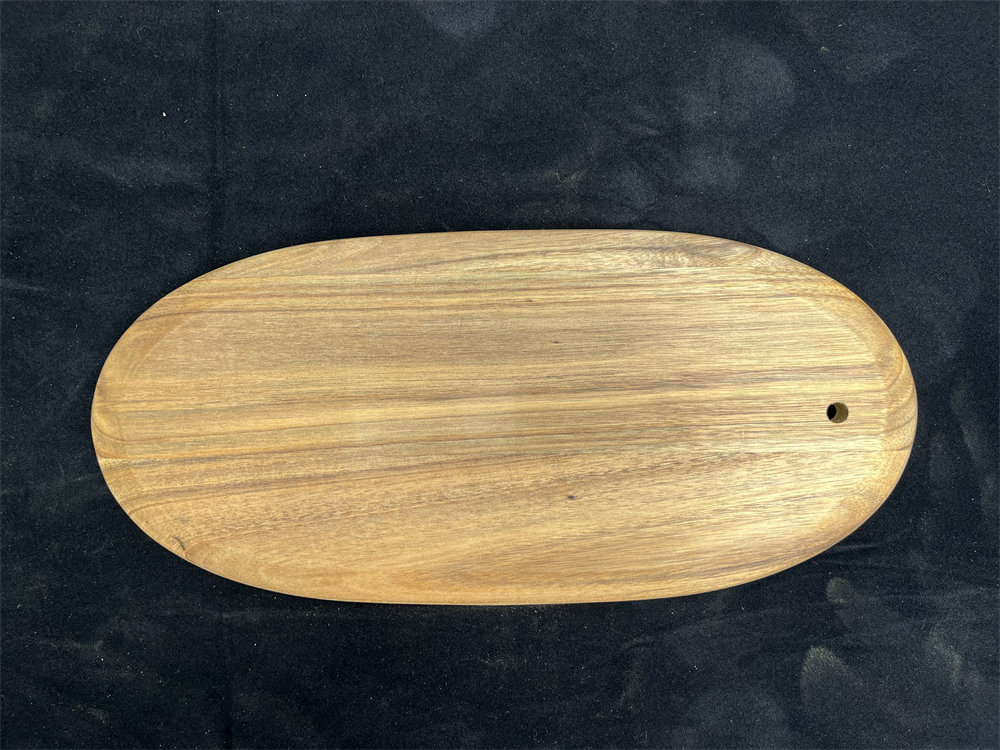
Our oval shaped kitchen chopping cutting board reflects this type of market demand, where natural acacia wood texture, practical shape, and kitchen presentation value can help wholesalers develop a more attractive product selection.
Restaurant suppliers and professional kitchen buyers usually focus more on repeated use, cleaning habits, and resistance to deformation.
For this channel, buyers should pay closer attention to thickness, material density, surface treatment, and whether the product can remain stable after daily washing and drying.
A board that does not sit flat can create immediate customer dissatisfaction. Even slight rocking on a countertop may be seen as a quality problem.
This is why buyers comparing chopping block vs cutting boards should not only review the top surface. They should also check bottom flatness, edge balance, and whether the board remains stable after moisture changes.
Rough or uneven edges can make a product feel cheap even when the wood itself is acceptable. In retail channels, this can affect customer reviews. In wholesale channels, it can affect repeat orders from retailers.
Good edge processing helps reduce complaints related to touch, appearance, and early cracking from weak corners or thin rim areas.
Many buyers approve a sample based on photos, weight, color, or general appearance. That is not enough for wooden kitchenware.
Before confirming bulk production, buyers should test the sample under more realistic conditions. Washing, drying, countertop placement, edge inspection, and surface checking can reveal risks that are not visible during a quick review.
If quality expectations are not clearly discussed before production, disputes may appear after delivery.
Buyers should define acceptable grain variation, surface smoothness, size tolerance, flatness, packaging method, and moisture-related concerns before placing a large order. This helps reduce confusion when the shipment is inspected.
A thick chopping block may look premium, but it may not suit every market. Some customers prefer lightweight boards that are easier to move, wash, and store.
Wholesalers should choose products based on actual sales channels rather than assuming heavier always means better.
A balanced wooden kitchenware selection may include larger boards for serving and display, stable boards for daily preparation, and thicker options for heavier kitchen use.
This approach helps buyers reduce the risk of ordering one product type that cannot satisfy different customer groups.
The most practical way to compare chopping block vs cutting boards is to begin with the customer’s use case. A board for restaurant preparation, retail gift sales, home kitchen display, and online kitchenware stores should not follow the same selection logic.
Once the use case is clear, material, thickness, shape, finishing, packaging, and inspection requirements become easier to define.
A better wooden board order should reduce problems before they reach the market. Our team can help buyers review product shape, acacia wood selection, surface finish, size planning, and bulk inspection points based on the sales channel.
For more wooden kitchenware options and supplier support, you can visit our website at https://www.xinyilinwooden.com/. A stable bulk order should not only look good in the sample stage, but also protect your customers, inventory, and cash flow after delivery.