Old wood furniture can collect dust, hand oils, smoke residue, wax buildup, food stains, and moisture marks over many years. Cleaning it successfully requires more than applying a strong household cleaner and scrubbing the surface.
The safest method depends on whether the furniture is varnished, lacquered, waxed, oiled, painted, laminated, or unfinished. A cleaning product that works on sealed furniture may discolor raw wood or damage an old decorative coating.
Antique, valuable, hand-painted, or historically important furniture should be inspected by a qualified conservator before deep cleaning or refinishing.
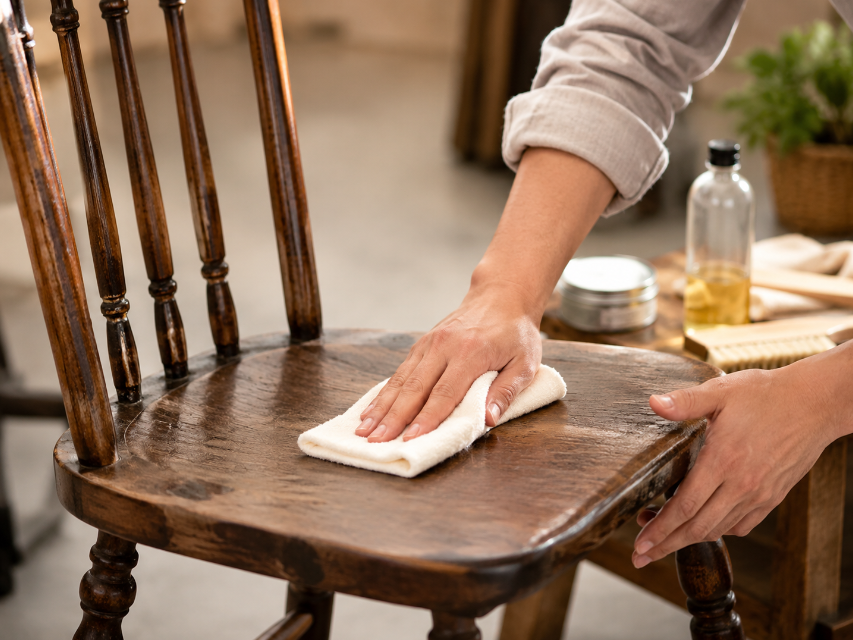
Before cleaning the complete piece, examine the surface under good light.
A glossy and smooth surface may indicate varnish, lacquer, or another protective coating. Oiled and waxed furniture usually has a softer sheen, while unfinished wood may feel more porous and absorbent.
Apply the planned cleaning method to the underside, rear panel, or inside of a cabinet door.
Stop if the cloth removes color, the surface becomes sticky, the finish turns cloudy, or the wood darkens unevenly.
A small test helps prevent a minor cleaning task from becoming a complete refinishing project.
Dust may contain small abrasive particles. Wiping a dusty surface with a wet cloth can drag these particles across the finish and create fine scratches.
Use a soft microfiber cloth, natural-bristle brush, or low-suction vacuum attachment to remove loose dust.
Use a soft brush around:
Carved edges
Drawer pulls
Decorative joints
Turned legs
Panel corners
Hinges and hardware
Avoid forcing a stiff tool into narrow joints because old glue and delicate decorative elements may already be weakened.
For furniture with a stable protective finish, mix a few drops of mild dishwashing liquid with lukewarm water.
Dampen a soft cloth and wring it thoroughly. The cloth should feel slightly moist rather than wet.
Wipe a small section in the direction of the grain, then dry it immediately with a second clean cloth.
Water can enter joints, cracks, veneer edges, and unfinished sections.
Excess moisture may cause swelling, lifted veneer, white marks, softened glue, or uneven staining. Do not pour water directly onto the furniture or leave a wet cloth resting on the surface.
Sticky areas may be caused by grease, old polish, adhesive, spilled drinks, or deteriorating surface coatings.
Begin with the mild soap solution rather than using alcohol, acetone, or strong solvent cleaners.
Wipe the residue gently, dry the surface, and inspect it before repeating.
Heavy rubbing may remove the furniture finish together with the dirt. When the sticky layer does not respond to mild cleaning, professional assessment may be safer than applying stronger chemicals.
Raw and lightly oiled wood absorb moisture more easily than sealed furniture.
Use a barely damp cloth and dry the area immediately. Avoid ordinary multipurpose sprays, silicone polish, and strongly scented cleaners that may penetrate the grain.
If the wood looks dry after cleaning, apply a finish or conditioner suitable for the existing treatment.
Do not assume that every furniture oil is compatible with every finish. Test the product first and follow the stated curing time.
Cleaning is also a good opportunity to examine the structure.
Check drawer runners, hinges, screws, handles, legs, shelves, and glued joints. Tighten loose hardware carefully, but do not force screws into cracked or weakened wood.
If the furniture moves excessively or a joint has separated, complete the repair before loading the shelf or cabinet again.
Place wooden furniture away from persistent moisture, heaters, air-conditioning outlets, and intense direct sunlight.
Use coasters beneath drinks, felt pads beneath decorative items, and table mats beneath hot dishes.
Regular light dusting is generally safer than waiting until a thick layer of dirt requires aggressive cleaning.
We manufacture wooden kitchenware and selected wooden products for home, hotel, retail, and food-service applications.
Our product scope includes Wooden Cutting Boards, utensils, coffee tamping stations, storage trays, coat racks, display units, decorative boxes, tissue holders, cabinets, and other customized wooden items.
With more than 15 years of production experience, our team supports OEM and ODM projects from product design and material selection through production and delivery.
Preparing a wooden homeware collection for retailers, hotels, gift stores, supermarkets, or private-label brands?
Send us your drawings, samples, dimensions, wood preference, finish, color, engraving, packaging, and order quantity. We will review your requirements and prepare a Custom Wooden Home Products proposal.