Oil can enter wood through cooking spills, greasy food, hand contact, furniture products, or unsuitable maintenance treatments.
Removing it depends on the type of oil and the wood finish. Fresh cooking oil on a sealed table may remain near the surface, while oil absorbed into unfinished wood can penetrate deeply and leave a permanent dark area.
Before treatment, determine whether the surface is furniture, flooring, a decorative product, or a food-contact item such as an Acacia wood cutting board.
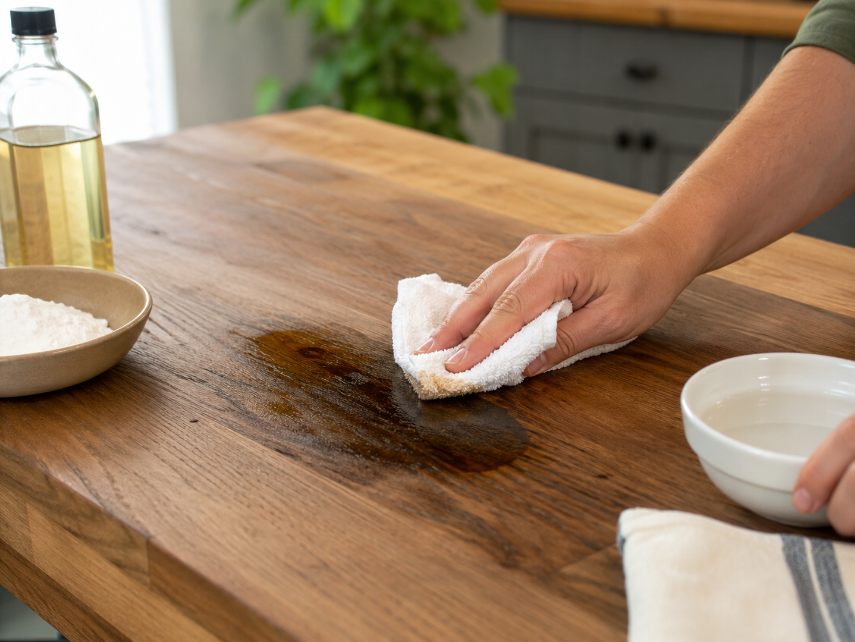
Place a clean paper towel or absorbent cloth over the spill.
Press gently without rubbing. Rubbing can spread the oil across a wider area and force it further into the wood grain.
Continue replacing the absorbent material until little additional oil transfers from the surface.
Different wooden surfaces should not be treated in exactly the same way.
| Wood Surface | Recommended Starting Method | Main Caution |
|---|---|---|
| Sealed furniture | Mild detergent and damp cloth | Avoid damaging the coating |
| Unfinished wood | Absorbent powder and minimal moisture | Oil may have penetrated deeply |
| Oiled cutting board | Mild soap and short washing time | Do not remove necessary conditioning oil aggressively |
| Painted wood | Cleaner approved for the paint | Strong solvents may strip the finish |
| Veneered wood | Very limited moisture | Water may lift the veneer |
Mix a small amount of mild detergent with warm water.
Dampen a microfiber cloth, wring it thoroughly, and wipe the oily area along the grain. Use a second damp cloth to remove soap residue, then dry the surface.
Kitchen degreasers, alcohol, and solvents may soften or discolor varnish, lacquer, paint, or decorative coatings.
When mild cleaning does not work, test a product approved for the exact furniture finish in a hidden area.
For oil that has entered raw wood, cover the area with an absorbent material such as baking soda or cornstarch.
Leave it in place long enough to draw out some of the oil, then remove it with a soft brush or vacuum attachment.
Several dry treatments may be safer than soaking unfinished wood with water.
When a dark stain remains after repeated treatment, light sanding may be necessary. Sanding changes the surface and should be completed evenly, especially on visible furniture or thin veneer.
An acacia wood cutting board may already contain food-safe conditioning oil or wax. The goal is to remove unwanted grease without stripping the board excessively.
Wash the board briefly with warm water, mild dish soap, and a soft sponge. Rinse it promptly and dry it with a clean towel.
Leaving a wooden board submerged can cause swelling, warping, splitting, or weakened glued joints.
Do not place it in a dishwasher. Heat, steam, detergent, and extended water exposure can damage the structure and remove protective oil.
A soft paste made from baking soda and a small amount of water may help lift light oily residue.
Spread the paste over the affected area, leave it briefly, and scrub gently with the grain. Rinse the board and dry it upright so air reaches both sides.
Avoid using a thick abrasive paste repeatedly, as excessive scrubbing may roughen the cutting surface.
Cleaning can leave food-contact wood looking lighter or drier.
After the board has dried completely, apply a food-safe mineral oil or board conditioner according to its instructions. Spread a thin, even layer over all surfaces and remove any excess.
Do not use ordinary vegetable oils that may oxidize and develop an unpleasant smell.
Not always. Oil may penetrate beyond the surface, especially in untreated or end-grain wood.
A light remaining color variation may be less damaging than aggressive sanding, bleaching, or solvent treatment.
For valuable furniture, veneer, or complex decorative pieces, consult a furniture-restoration professional.
Our factory produces Acacia Wood Cutting Boards, pizza paddles, serving boards, bread boards, storage trays, utensils, and customized wooden kitchenware.
Buyers can request different dimensions, shapes, handles, hanging holes, juice grooves, engravings, finishes, and packaging. Product structures can be developed from buyer drawings or physical samples.
Developing cutting boards for supermarkets, restaurants, gift suppliers, kitchen brands, or online retailers?
Share your target size, thickness, shape, handle design, oil or wax finish, logo, packaging, and purchasing quantity. We will prepare an Acacia Wood Cutting Board proposal for sampling.