Wooden dinner plates can be suitable for regular dining when they are specifically manufactured for food contact and maintained according to the supplier’s instructions.
Safety depends on the wood, surface finish, construction, food type, cleaning method, and condition of the plate. A smooth plate with an intact food-contact finish is easier to maintain than one with cracks, loose fibers, or peeling coating.
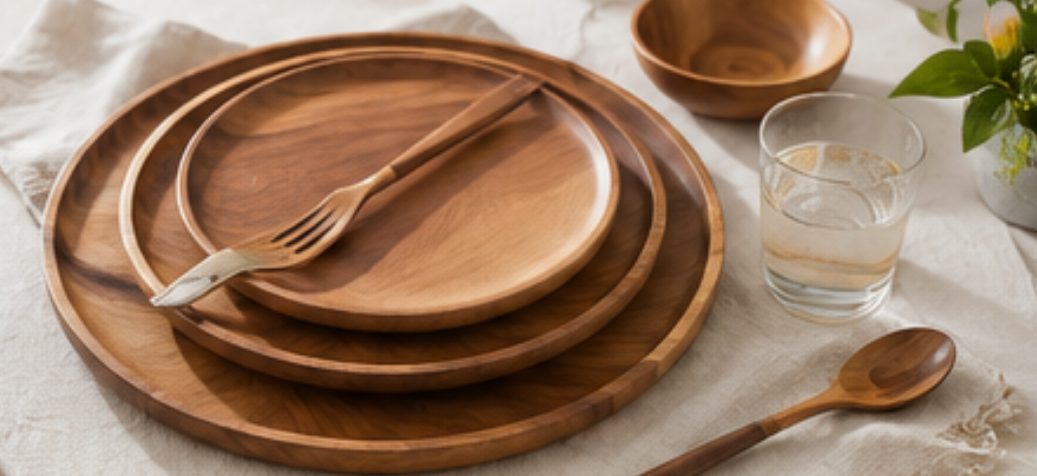
A wooden plate should not be selected only because it has the correct shape.
The buyer should confirm:
Wood species
Intended food application
Surface finish
Temperature limitations
Washing method
Construction type
Maintenance requirements
Target-market requirements
Decorative wooden trays may use coatings or structures that are not intended for direct contact with meals.
Wooden plates are well suited to foods that do not contain large amounts of free liquid.
Typical applications include:
Bread
Pizza
Sandwiches
Pastries
Fruit
Salad
Cheese
Desserts
Breakfast foods
Grilled dishes
Dry snacks
They are commonly used in cafés, restaurants, hotels, bakeries, gift shops, and home-tableware collections.
Wooden plates may hold food with sauces or moisture when the finish is suitable and the plate remains in good condition.
However, wet or acidic food should not remain on the surface for an extended period.
After service:
Remove the remaining food.
Wash the plate promptly.
Rinse away detergent.
Dry both sides.
Store it in a ventilated area.
Long contact with liquid can increase staining, odor absorption, or dimensional movement.
Many wooden plates can hold ordinary hot meals, but the temperature limits should be confirmed with the supplier.
A wooden plate should not automatically be used inside:
A microwave oven
A conventional oven
A steam cabinet
A dishwasher
A food warmer
A sterilizing machine
Direct flame
High temperature can damage the finish, dry the wood unevenly, or cause warping.
Use warm water, mild detergent, and a soft sponge.
Wash the plate soon after the meal rather than allowing food residue to dry.
Dry the complete surface with a clean towel and place it upright or in another ventilated position.
Placing a wet wooden plate flat on a countertop can trap moisture beneath it.
Uneven drying may lead to:
Warping
Cupping
Dark moisture marks
Raised grain
Joint stress
Surface odor
A plate rack can help air reach both sides.
Dishwashers expose plates to strong detergent, hot water, repeated spraying, and heated drying.
Wood may absorb moisture during the wash and lose it too quickly during the drying cycle.
Repeated use may result in:
Cracking
Surface roughness
Open joints
Finish failure
Distortion
Fading
Hand washing is normally recommended unless the product specification clearly states otherwise.
Any food-contact surface can become contaminated when it is not cleaned and dried correctly.
The surface condition is particularly important. Deep cracks and damaged joints can trap residue and moisture.
Good maintenance includes:
Prompt washing
Complete rinsing
Immediate drying
Ventilated storage
Regular inspection
Separating damaged products
Following the finish-maintenance instructions
Plates used to hold raw ingredients should not be mixed casually with products used for ready-to-eat meals.
Remove a plate from use when it develops damage that cannot be cleaned effectively.
Warning signs include:
Deep cracks
Mold
Loose splinters
Peeling finish
Strong odor
Soft wood
Open laminated joints
Severe warping
Burned surfaces
Minor changes in wood color may be natural. Mold, structural damage, and failed finishes require more attention.
For commercial and retail orders, the specification should include practical details beyond diameter and wood color.
| Item | Purchasing Requirement |
|---|---|
| Plate diameter | Dinner, side, or dessert application |
| Plate depth | Flat meal or food with light sauce |
| Rim design | Raised, flat, or handled |
| Wood species | Appearance, weight, and cost |
| Surface treatment | Food-contact and cleaning requirements |
| Construction | Solid wood or laminated |
| Stackability | Storage and transport efficiency |
| Logo | Laser engraving or other branding |
| Packaging | Protection against scratches and impact |
| Inspection | Dimensions, finish, cracks, and warping |
Sample testing can help confirm that the plate suits the intended menu and cleaning routine.
Restaurants, retailers, and hospitality operators need plates that store efficiently.
The base and rim should be designed so plates remain stable while still being easy to separate.
A practical stackable structure helps:
Save storage space
Reduce movement during transport
Protect visible surfaces
Improve table-service efficiency
Simplify carton design
Plates should not be packed so tightly that the finish rubs or moisture becomes trapped between them.
Our factory has manufactured wooden kitchenware since 2007 and supports overseas food brands, retailers, supermarkets, gift companies, and hospitality suppliers.
Our existing products include cutting boards, pizza boards, utensils, pepper mills, rolling pins, coffee accessories, trays, and customized wooden products.
For Wooden Dinner Plates, buyers can provide drawings or physical samples. We can review the wood, diameter, thickness, rim design, surface finish, logo, stacking structure, packaging, and order quantity.
Send us the required plate sizes, intended food application, wood preference, surface finish, stacking requirements, branding, packaging, destination market, and purchasing quantity.
We will prepare a Wooden Dinner Plates proposal for restaurants, retailers, hospitality projects, and branded tableware collections.